Why Wildfire Zones Are Still Building Homes to a Lower Standard
Story at a Glance:
- Type V construction, predominantly wood framing, is used in 92% of new single-family homes but is still vulnerable to wildfires.
- Non-combustible alternatives like steel and concrete are standard in commercial buildings, but underutilized in residential.
- Advances in prefabrication are making steel and concrete more practical, and insurance pressure is shifting the long-term cost calculus away from wood.
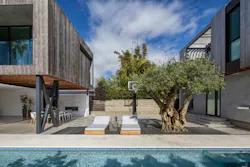
For decades, Type V construction has been the standard in residential development across the U.S. Wood framing became the industry default for a variety of reasons; it was cost effective, readily available, familiar to contractors, and easy to scale quickly—and, in much of the country, it still is.
But in wildfire-prone regions, many of which continue to rely on combustible materials and construction methods, the question arises: Are we creating homes to survive today’s climate, or are we rebuilding with the same vulnerabilities over and over again?
This question is connected deeply to how we approach design as a firm. Growing up in Iceland, we were influenced by an environment defined by extreme weather and limited resources. Resilience was always a core consideration, embedded at the outset of any building project.
That perspective continues to inform how we think about residential construction in climate-impacted regions today, where design must anticipate environmental conditions rather than simply react to them.
Are we creating homes to survive today’s climate, or are we rebuilding with the same vulnerabilities over and over again?
We’ve also seen conditions across Georgia and Florida following the same pattern, with fires growing larger and more unpredictable in communities still predominantly building single-family homes using the same Type V construction standards that made those homes vulnerable in the first place.
That conflict is also visible in how building codes address risk. Buildings over a certain size or occupancy are generally required to meet Type II standards, relying primarily on non-combustible materials like steel and concrete. This distinction surfaces an important conversation for the architecture, engineering and construction industry: If non-combustible construction is already standard for commercial and multifamily buildings, why are homes in wildfire zones still held to a lower bar, particularly when many regions outside the U.S. build durability and environmental response into residential construction from the start?
Too many rebuilding conversations stop at creating defensible space and developing emergency response protocols. Both strategies matter, but neither addresses the materials used to construct homes, how they’re assembled, or the policies governing those decisions.
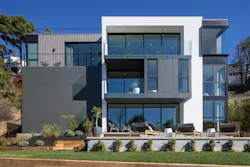
Type V and Type II: Key Differences
This discussion necessitates an understanding of the key differences between Type V and Type II construction:
- Type V construction is by far the most common residential construction standard in the U.S., used in 92% of new single-family homes. It relies on combustible materials (usually wood framing) for structural systems like walls, floors, and roofs, and is favored for its cost-effectiveness, ease of construction, and build speed.
- Type II construction uses non-combustible materials, including steel, concrete, and masonry, and is the standard for commercial or multifamily buildings, warehouses, and schools, where more stringent fire-resistance requirements for occupant safety apply. These projects strike a balance between fire safety and cost efficiency.
The distinction between these two types is particularly important in areas susceptible to wildfires or other extreme weather events. Flying embers and firebrands can travel miles ahead of an active fire, entering vents and igniting combustible materials.
Once a single structure ignites in a given area, neighboring homes themselves turn into fuel sources, stoking the fire as it spreads throughout entire communities. This process accounts for almost 90% of the homes destroyed indirectly in wildfire events.
While no building can ever be considered completely “fireproof,” the adoption of non-combustible construction methods and Type II standards can significantly reduce the likelihood that a home becomes a factor in a fire’s spread.
Why Do We Still Favor Wood Framing?
The dominance of Type V practices is not surprising. Wood framing is more cost-effective throughout the life of a project, in part due to more favorable upfront costs compared with alternatives like steel and concrete, which can cost substantially more depending on project scale and local labor availability.
Steel and concrete also require specialized fabrication and installation, which narrows the contractor pool and can slow the schedule relative to conventional wood framing.
The adoption of non-combustible construction methods and Type II standards can significantly reduce the likelihood that a home becomes a factor in a fire’s spread.
Another key benefit to wood is the flexibility it affords teams during construction. On-site adjustments can be made quickly with the use of standard tools, while steel and concrete systems typically require more direct planning and coordination before fabrication to ensure alignment.
These advantages have continued to solidify wood’s position as the default material for residential construction for decades.
But that is changing.
Alongside economic factors, such as timber price volatility and major advances in prefabrication and panelized building systems, we’ve noticed considerable movement and changing sentiment surrounding the efficiency of steel and concrete, weighing not only up-front materials costs but also long-term costs tied to insurance, maintenance, and disaster resilience.
Builders and their clients are increasingly weighing not just upfront costs but long-term exposure tied to insurance, maintenance, and disaster resilience.
Moving Beyond Type V: New Developments
One of the biggest misconceptions about non-combustible construction is that shifting away from wood framing automatically makes the building process more difficult. But advances in prefabrication methods and precision in manufacturing have made steel and concrete more practical and efficient, among a variety of other benefits.
These systems provide several advantages, particularly in terms of performance, that are becoming increasingly attractive to developers and design teams.
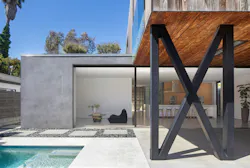
Unlike wood, steel does not warp, twist, shrink, or rot over time, which allows for greater stability throughout the life of a home. Non-combustible materials also provide greater resistance to termites, moisture, and mold, critical factors in areas experiencing extreme weather. In wildfire-prone regions specifically, these systems reduce the likelihood that a home becomes a contributing factor in a fire’s spread.
The use of prefabricated steel and panelized construction systems are also helping to reshape long-held assumptions about the speed and efficiency of these materials. Many steel systems now function as modular, buildable assemblies, with components fabricated off-site and delivered ready to install. This provides a scalable method to implementation that reduces overall waste and shortens construction times.
Resilience must become a foundational consideration—built into material selection, planning, and the code requirements that govern both.
The larger shift in the conversation around Type V construction is how it’s impacting conversations around resilience. Short-term thinking about upfront costs and barriers associated with using non-combustible materials are giving way to long-term considerations, driven by insurance pressures, maintenance costs, and performance/durability over decades.
These approaches are increasingly viewed not only as “premium” or specialized, but as a practical investment in resilience for communities facing major climate events.
A Shift in Mindset, Not Just Materials
The conversation about Type V and Type II construction is larger than a discussion over wood, steel, and concrete. It reflects a broader shift in how the architecture, engineering, and construction industries are thinking about resiliency, especially as wildfires continue to increase in frequency.
The goal here is not to eliminate the use of timber or dismiss the value of sustainable wood products and construction techniques. Wood will continue to play an important role in many areas of our lives, particularly when sourced responsibly. But in regions where wildfire exposure increases year-over-year, and rebuilding continues to rely on combustible materials, we must reevaluate our approach to responsible, resilient design and construction.
Resilience must become a foundational consideration centered on material selection and planning, underscored by code requirements that support long-term community safety. Our industry possesses many of the tools needed to make this a reality—the question now is whether we are willing to apply them at the scale the moment requires. Rebuilding communities only to leave them vulnerable to the next wildfire is not a path forward.
Related Reads:
About the Author

Erla Dögg Ingjaldsdóttir
Erla Dögg Ingjaldsdóttir, Assoc. AIA and IIDA, and Tryggvi Thorsteinsson, Assoc. AIA, are Icelandic-born, Los Angeles-based design visionaries and co-founders of the award-winning design firm Minarc, established in 1999. Specializing in a broad range of projects, from residential and commercial to public spaces, the duo is known for their innovative approach to blending interior and exterior environments through the creative use of natural light, outdoor features, and framed views of the surrounding landscape.
Erla and Tryggvi’s work reflects a deep commitment to sustainability, evident in their use of reclaimed materials and energy-conscious design choices. They continue to be recognized for their holistic design philosophy, which embraces functionality, flexibility, and environmental responsibility. When they aren’t creating groundbreaking designs, Erla and Tryggvi enjoy exploring the world, hosting gatherings with friends and family, and cherishing time spent with their three children.

Tryggvi Thorsteinsson
Erla Dögg Ingjaldsdóttir, Assoc. AIA and IIDA, and Tryggvi Thorsteinsson, Assoc. AIA, are Icelandic-born, Los Angeles-based design visionaries and co-founders of the award-winning design firm Minarc, established in 1999. Specializing in a broad range of projects, from residential and commercial to public spaces, the duo is known for their innovative approach to blending interior and exterior environments through the creative use of natural light, outdoor features, and framed views of the surrounding landscape.
Erla and Tryggvi’s work reflects a deep commitment to sustainability, evident in their use of reclaimed materials and energy-conscious design choices. They continue to be recognized for their holistic design philosophy, which embraces functionality, flexibility, and environmental responsibility. When they aren’t creating groundbreaking designs, Erla and Tryggvi enjoy exploring the world, hosting gatherings with friends and family, and cherishing time spent with their three children.