How a 'Builder of the Year' Designs for Year-Round Beach Living

Delaware's Marnie Oursler of Marnie Custom Homes on the shift from seasonal retreats to year-round waterfront homes, and what it takes to build these more complex projects right
Jan. 16, 2026
4 min read

Story at a Glance

  • This five-question Q&A is part of our ongoing 'Builder in 5' series
  • Marnie Oursler says clients now prioritize year-round living in their beach homes, which has changed the way she builds and the features incorporated into projects. 
  • She's been an early adopter of construction technologies, such as advanced house-wraps and insulation, which has enhance home performance of her oceanfront designs.
  • Key handoff points between design and construction are managed through pre-construction and pre-drywall meetings for seamless coordination, she says.
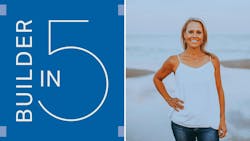
Welcome to Builder in 5, our five-question Q&A series with the minds behind standout custom homes.

Today, we chat with Marnie Oursler, president and owner of Marnie Custom Homes in Bethany Beach, Del. Named NAHB's 2022 Custom Home Builder of the Year, Oursler built the first LEED-certified home in Delaware and specializes in luxury waterfront homes throughout the state's beach region.


1.  How have clients’ expectations or priorities changed over the past few years, and how has that shifted the way you design or build?

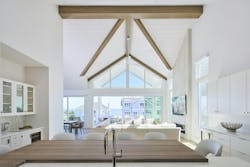
Marnie Oursler: Since COVID, our clients are spending significantly more time working from the beach, which has shifted how we design our homes. We now plan with year-round living in mind, incorporating increased storage, dedicated office spaces, larger closets, home gyms, saunas, cold plunges, and expanded garage capacity.

We are also integrating more advanced technology throughout the home, much of it controllable via smartphones. This includes automated window treatments, climate and lighting controls, security systems, cameras, and audio/visual features. Outdoor living has become an equally important focus, with more elaborate pools, putting greens, fire features, and outdoor lounge areas designed to be enjoyed throughout the year. 
2. You’ve built more than 150 custom homes, many of them oceanfront. What’s one building practice you’ve changed over the past decade?
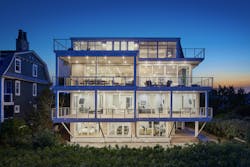
Oursler: Construction technology has advanced significantly over the past decade. Several methods we’ve introduced—such as self-adhering weather-resistant barriers (house-wrap)—have since become more mainstream. Today’s house-wrap products perform far better, and we are seeing measurable improvements in overall home performance as a result.
 
We are also taking a more innovative approach to HVAC and insulation strategies, particularly as designs incorporate more glass and large sliding doors that open directly to the ocean. In many cases, entire wall systems open to the view, which allows humidity and moisture to enter the home when doors are open. Even when closed, these large expanses of glass create substantial solar gain, especially given the east-facing sunrise. We address these challenges proactively by implementing targeted measures early in the design and construction process.

3. You’re both a builder and a designer. Where do you think the handoff between design and construction most often breaks down? 

Oursler: We have found the transition from design to construction typically requires extra coordination at two key moments: the start of construction and just before drywall. To address this, we hold a Design-to-Construction meeting prior to construction start to align on framing and mechanical changes. We also meet again during the mechanical phase, before drywall, to confirm all finish details—including interior trim, built-ins, paint, tile, wallpaper, and other selections—are clearly coordinated.

4. Where in you most comfortable taking risks right now, and what gives you confidence in those bets?
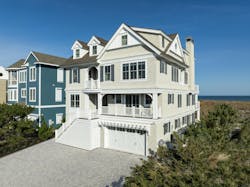
Oursler: We are expanding our territory and beginning to build farther from our Bethany Beach, Delaware office, including custom homes in Rehoboth Beach, Delaware. With a strong team of project managers and a staff of 21 employees—nearly double our size from five years ago—I am confident in our ability to successfully expand into additional beach markets.

5. As your firm has grown, what’s been hardest to standardize without compromising quality, and how have you addressed it?

Oursler: The homes themselves have become more structurally complex, with designs further enhanced by our in-house design team. Building requirements are also more stringent, requiring increased coordination between design and construction. While our projects have always demanded a high level of strategy, organization, and attention to scheduling—such as product lead times, subcontractor coordination, and change management—standardizing schedules without sacrificing quality has remained a challenge.
 
We have addressed this by implementing stronger systems, developing more comprehensive scopes of work for our subcontractors, and increasing coordination through formal Design-to-Construction meetings. Additionally, we have introduced improved tools and processes for our project managers focused on scheduling, quality control, and safety. To support this, we now hold more frequent internal meetings to ensure alignment and accountability across all phases of the project.

For more insights from the field, read our earlier Builder in 5 interviews, and reach out with suggestions on who we should interview next.


About the Author

Pauline Hammerbeck

Pauline Hammerbeck is the editor of Custom Builder, the leading business media brand for custom builders and their architectural and design partners. She also serves as a senior editor for Pro Builder, where she directs products coverage and the brand's MVP Product Awards. With experience across the built environment - in architecture, real estate, retail, and design - Pauline brings a broad perspective to her work. Reach her at [email protected].

Sign up for our eNewsletters
Get the latest news and updates