Luxury Housing Markets to Watch: Charleston, Austin, and Park City
Story at a Glance
- Austin, Charleston, and Park City are drawing high-end buyers, making them markets to watch for custom residential activity in 2026.
- Builders and architects face unique challenges in each market, from topography and zoning to climate and site complexity.
- Client expectations continue to emphasize personalization, wellness, and integration of new materials and technologies.

Where Americans choose to plant roots is shifting, as buyers seek improved quality of life, reliable schools, lower costs of living, and environments better suited to how families want to live. For custom builders and residential architects, this movement offers a real-time view into evolving priorities and the markets capturing long-term demand.
Austin, Texas; Park City, Utah; and Charleston, S.C., are leading custom-home markets shaped by these shifts. While each reflects a distinct lifestyle, they share common threads: designs driven by wellness, sustainability, and long-term value, along with site- and climate-specific challenges that continue to push residential construction innovation.
Market to Watch: CHARLESTON, S.C.
No longer just a seasonal winter escape, Charleston has emerged as one of the fastest-growing U.S. metros over the last few years, drawing affluent buyers from the Northeast, Midwest, and major East Coast cities.
"Charleston has a strong architectural language built over centuries, and we try to work with that, not against it," says Guyton Ash, co-founder of Charleston-based Artis Construction. "It's one of the few places where old and new still have to work side by side."
That's by design. One of the country's oldest cities, Charleston is anchored by stringent historic preservation laws that safeguard its architectural fabric. The city pioneered the country’s first historic zoning ordinance in 1931 and established the still-active Board of Architectural Review (BAR), which approves proposed exterior changes to buildings.
As a result, Charleston's custom home market isn't driven by trends but is rooted in timeless design and understated luxury, guided by the region's Lowcountry aesthetic.
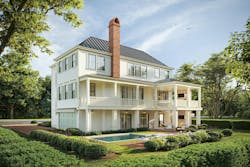
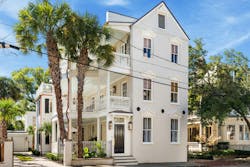
Charleston's architecture is a blend of styles, including Georgian, Federal, Greek Revival, and Victorian, centered around the iconic Charleston single house. Traditionally narrow (just one room wide), these homes were designed to maximize street frontage and capture breezes. Features, like piazzas, raised foundations, tall ceilings, louvered shutters, and materials such as tabby, limestone, brick, cypress, and reclaimed pine remain common, though today they are often interpreted in contemporary ways.
"We’re not copying old styles, but we are using the same techniques that made those homes stand up over time," Ash says.
Navigating Regulations and Climate
For builders and architects, deep knowledge of the city's regulatory and design framework is essential, and so is the ability to educate out-of-state buyers on what can be built.
"A steady influx of sophisticated new homeowners has raised the bar for quality and service, and there's a real demand for talented and passionate builders," says Sebastian von Marschall, principal architect and founder of his eponymous Charleston-based firm. "We also see a growing desire for authenticity in local design vernacular and materials that promote performance and longevity. In many cases we lean heavily on the experience of craftsmen and specialists who have been doing this much longer than we have."
Beyond regulations, solving for the climate is another challenge builders and architects perpetually face in Charleston, a low-lying city prone to flooding, tropical storms, and extreme heat. With temperatures and sea levels expected to rise in the region, finding cutting-edge solutions through materiality or technology to mitigate damage is essential.
"Our climate demands respect," Ash says. "That starts with how you site and orient the house, how you handle drainage, and how you elevate the structure, if needed. We work with engineers to make sure the structure is built to handle wind and water, but we conceal those systems behind thoughtful architecture and pay close attention to moisture, the effect of humidity on materials, and design for passive performance before relying on mechanical systems."
New Residents Reshaping the Market
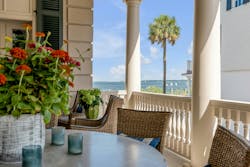
Charleston's appeal as a primary place of residence continues to grow, anchored by its coastal lifestyle, architectural heritage, cultural sophistication, and year-round mild weather. A booming local economy with a rapidly expanding tech sector, and major IT and manufacturing companies opening offices there, has accelerated the shift.
As a result, ultra-high-net-worth individuals who see long-term value in Charleston are relocating full time, in turn reshaping its real estate market and creating a new wave of opportunity for local artisans, custom home builders, and architects.

Chris Cunniffe, an agent with Engel & Völkers Charleston, notes that his luxury clients, both local and out of state, are increasingly willing to pay a premium for custom features, whether it's a ground-up new build or a renovation with a historic shell. In his experience, clients are more interested in historic renovation projects that can be newly constructed on the interior to adapt to modern living.
The numbers reflect the momentum. Ruthie Ravenel, an agent with Daniel Ravenel Sotheby's International Realty, points to a recent record-breaking transaction—a 225-year-old estate that sold for $21.028 million—as an example of Charleston's trajectory as a market to watch. Buyers, she says, are focused on lifestyle benefits, like great schools, a prestigious fine arts scene, world-class dining, and city-like culture without the high costs or density.
"Charleston attracts top talent and tradespeople," Ash says. "It's a climate that keeps you honest, and that's what makes it exciting. We get to build homes that are rooted in place, built to last, and reflective of the people who live in them."
Market to Watch: AUSTIN, TEXAS
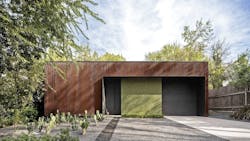
Austin's rise as one of the country’s fastest-growing real estate markets and economic hubs has reshaped not just who is building here, but how homes are being designed and delivered. The market has shifted from speed-driven volume towards highly intentional, design-forward residential work.
Today’s clients are primarily full-time residents commissioning long-term custom homes, defined less by transience and more by easy livability, high performance (energy efficiency, healthy indoor air quality, and durability), and lasting architectural quality.
The Pandemic Surge
During the peak years of the pandemic, Austin's real estate market surged and became synonymous with the start of America's wealth migration. Buyers eager to leave high-cost cities like New York City, Los Angeles, and San Francisco purchased homes sight-unseen and relocated at record speed for the region's outdoor lifestyle, Texas's tax advantages, lower cost of living, and job opportunities. Tesla, SpaceX, and Oracle moved their headquarters to Austin during this time.
Builders and architects were stretched thin, developing housing to meet the growing demand. That pressure reshaped how builders and architects joined forces and collaborated, and permanently elevated both the city's design aesthetic and customer service expectations.
A More Grounded Market
Though the broader housing market has since cooled, many high-earning executives, wealthy millennials, billionaires, and entrepreneurs now consider Austin a true home base. As temporary residents have come and gone, builders and architects now have a chance to focus on meaningful, long-term homes for more discerning clients.
A May 2025 ConsumerAffairs report ranked Austin ninth nationally in new-home construction, signaling that custom building momentum remains strong even in a normalized and balanced market.
Design professionals say this longer-term view has reinforced Austin’s culture of experimentation and openness to new ideas.
"Austin has a spirit of trying new things in relation to both architecture and design," says Austin Smock, founder of the multidisciplinary Smock Studio. "Austin is quirky and clients value exploration, which perfectly matches its energy."
Architectural Freedom
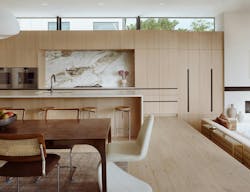
Unlike many historic markets, Austin is not heavily constrained by preservation laws and openly embraces new, ultra-contemporary architecture. Soaring glass towers live alongside charming low-rise neighborhoods, such as the historic Rainey Street District and South Congress where Victorian- and Bungalow-style homes remain intact.
Growth extends beyond downtown into Westlake, Barton Creek, Spicewood, Lake Travis, and the broader Hill Country, each boasting a variety of architectural styles from Craftsman and Midcentury Modern to contemporary and Spanish Revival. There's a wide canvas for custom residential work.
Austin’s real estate vernacular, architects say, is driven less by overarching aesthetic trends and more by how homes support day-to-day living.
Livability, longevity, and personalization guide most of client design decisions, with many entrepreneurial and solution-oriented buyers welcoming emerging materials and technologies that can enhance health, reduce carbon impact, or improve overall well-being. Sustainability is now a baseline expectation rather than an upgrade.
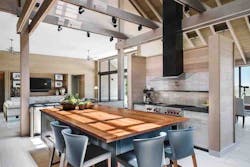
"More and more clients are coming to us for help streamlining a lifestyle experience in their home. Austin in general has an active outdoor culture," says architect Mark Odom, founder of Mark Odom Studio. "As a commitment to client wellness, we always bring the outdoors inside into each one of our homes."
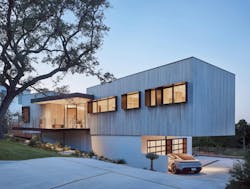
Despite Austin's architectural diversity, contemporary architecture and sleek, minimalist design dominate current demand, often accompanied by open floor plans, smart-home integration, and seamless indoor-outdoor living.
As projects grow in scale and complexity, architects note a corresponding shift in the city’s design culture.
“Austin’s architectural community is only getting more sophisticated and layered as the city gets larger,” Odom adds. “We were once known for smaller-scale, high-quality architectural gems, which has now comfortably translated into larger-scale projects.”
Much of Austin’s current luxury construction is concentrated in tear-downs, infill sites, and irregular lots, which favor true custom builds. Steep Hill Country terrain, limestone bedrock, floodplain regulations, and extreme heat add layers of complexity that shape every phase of design and construction, meaning nearly every project requires a fully customized approach.
Housing professionals here say that clients seeking high performance are pushing builders, architects, and engineers to coordinate earlier and more closely than ever before.
Market to Watch: PARK CITY, UTAH
Park City, a former mining town, has emerged as one of the country's most attractive year-round luxury real estate markets, driven primarily by buyers scooping up second, third, or fourth homes.
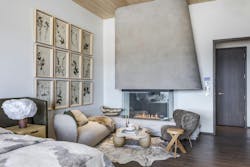
Located 40 minutes from Salt Lake City, Park City is anchored by two world-class ski resorts: Park City Mountain and Deer Valley Resort. Deer Valley's East Village expansion for the 2025-2026 ski season more than doubled the size of the resort, adding more than 3,700 skiable acres to its existing terrain.
Educating Clients Early
Often described as a more accessible alternative to glitzy ski towns like Jackson Hole, Wyo., or Aspen, Colo., Park City is quickly narrowing that gap. In addition to its stock of high-end single-family homes, a wave of luxury condos is reshaping the market, with global hospitality brands, such as the Four Seasons, signaling a commitment to the area.
Other notable custom residential developments include the residents-only Marcella Club and Velvaere, an intimate ski-in/ski-out community with Nordic-inspired spa amenities.
Builders working in Park City say the region's appeal comes with technical demands that set it apart from other luxury markets.
"Park City's complex topography demands precision engineering with a multi-collaborative team of engineers and builders," says Charles Ochello, founder and CEO of custom home builder, Vitruvius Built. "Site foundations are stepped or cantilevered deep helical piers into bedrock, while expansive clays and perched groundwater require over-excavation, structural fill, and robust drainage systems."
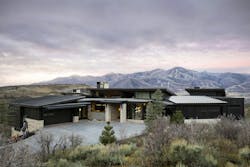
For many firms, the challenge extends beyond construction. With a high concentration of out-of-state clients, builders often take on the role of educating clients early in the process, walking them through Park City's market challenges, like limited building sites and zoning restrictions. Ochello says that new construction is overwhelmingly driven by out-of-state buyers from the Northeast, Midwest, and South.
"Our luxury buyer is not impacted by interest rates, so they can pull funds from their stock portfolio," says Laurie Wing, a real estate agent with Summit Sotheby's International Realty and co-owner of Dowie Wing Custom Homes. "That is what is driving growth in Park City's luxury market. Builders are able to have a strong presence among buyers who know exactly what they want."

Extreme Personalization
Wing says that personalization is central to demand at this level.
"In this high-end market in particular, buyers want to personalize every aspect of their home—they don't want the same thing that everyone else has. It is amazing to see what people can create when they have unlimited budgets."
Wing's dual role as a high-end real estate agent and as a co-owner of a luxury custom-build firm offers a front-row view of shifting client and buyer demand, with an opportunity to directly shape and tailor to those expectations.
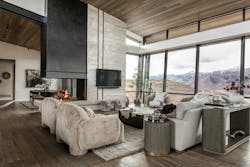
On the design side, architects say Park City’s aesthetic has evolved alongside its clientele. Nate King of Salt Lake City-based Sparano and Mooney Architecture, says that architectural language in Park City has skewed away from a rustic mountain lodge aesthetic, which dominated the industry for years, and into what's known as the Mountain Modern style.
"There's a desire for natural materials, but in a more minimalist way," King says. "Preserving the area's traditional mountain character is still important, but it's more focused on interpreting them in a refined way."
Beyond terrain and design, weather remains the most consistent challenge.
"Going up against mother nature, who every winter dumps that beautiful white powder on our ski mountains and our construction sites, creates permitting delays, challenges of procuring materials, and a shortage of subcontractors," says Charlie Taylor, a broker with global real estate firm The Agency, which has a Park City office.
Each of these markets—Austin, Charleston, and Park City—faces distinct site and climate challenges that shape how custom homes are designed and built. But they share a common thread: buyers committed to long-term value, design quality, and homes tailored to how they want to live.
Custom building is inherently local, but some markets signal broader shifts sooner than others. For builders and architects watching migration patterns and evolving client priorities, these three are worth following closely in 2026.
You Might Also Like


About the Author
Emma Reynolds
Emma Reynolds is a New York City-based freelance luxury writer who covers travel, real estate, design, architecture, and more. Her works has appeared in Forbes, Robb Report, Elite Traveler, Business Insider, Mansion Global, and many more.