Waterfront Cabin in Seattle Draws Design Inspiration From the Sea
Story at a Glance:
- The Seattle home features nautical design elements such as porthole windows, salvaged wood beams, and a maritime-inspired color palette.
- A significant addition includes a third-floor deck and primary suite to enhance waterfront views and indoor-outdoor living.
- Custom cabinetry, glass-fronted kitchen storage, and innovative space-saving solutions optimize the home's compact layout.
- Exterior materials like cedar shingles, aluminum railings, and concrete were selected for durability against Seattle’s weather, with moisture management a key focus.
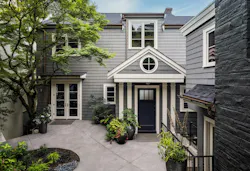
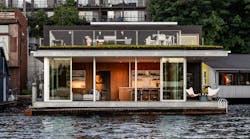
With its headquarters in Seattle, Dyna Builders is no stranger to floating-home construction, an experience they were able to apply to a remodel of a compact waterfront home in the city's Magnolia neighborhood.
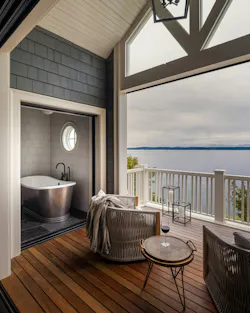
Known as the Boat House, the 2,742-square-foot seaside cabin draws on maritime influences, with porthole windows, intimate rooms, and a waterfront setting that gives it the true feeling of a boat home.
“We are doing a lot of the same elements, but more simplified because we were able to fall back on more traditional building systems,” says Gus Poole, operations manager at Dyna Builders.
The home was originally built in 1925 and has undergone various renovations over the years. A full rebuild by Paul Moon Design in 2010 maintained the original footprint but completely reimagined the structure.
Paul Moon Design also joined Dyna Builders in the most recent round of updates, serving as both architect and interior designer. Most recently, the home received a third-floor addition, along with interior upgrades that keep with the home’s nautical theme.
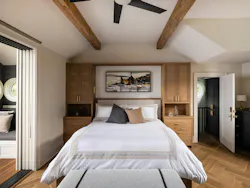
Nautical Interiors Suited for a Waterfront Home
The most significant renovation was the third-floor addition, which includes a deck, office, and what Poole refers to as “one of the all-time great primary suites” he’s ever worked on.
The primary suite is rooted in its connection to the outdoors, with an indoor-outdoor porch outfitted with a sofa that doubles as a bed during warmer evenings. A primary bathroom with a deep, freestanding tub opens up onto the porch through a sliding door, maximizing the seaside views.
“I think the best part about [this project] was that [the clients] built the house that they wanted,” says Poole. “They love to entertain, they love to be in their space and connect to the outdoors, and when you’re in the owner’s suite, you really feel like you can be there and be involved in what's going on outside all year-round.”
MORE: Delaware Beach Retreat Designed to Maximize Views
The home’s waterfront location plays a major role in the material and color palette selections. Interiors feature a blend of natural wood, including cedar shiplap, warm white oak flooring, and salvaged wood beams.
The warm wood tones are complemented by a bright, airy interior with deep blues and warm grays that match the exterior.
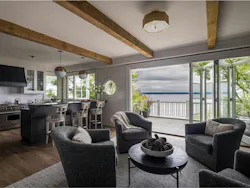
Making Tight Spaces Work
In total, the home features three bedrooms, five bathrooms, an office, and gym. While the floor plan offers plenty of square footage, heavy trimwork, detailed cabinetry, and a segmented layout make it feel much more intimate.
Because the individual rooms are compact, finding storage and space-saving solutions was integral to creating an efficient plan, says Poole.
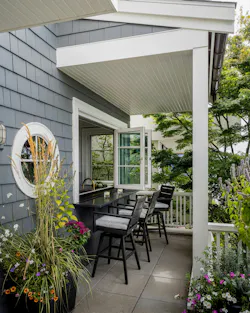
Custom cabinetry is featured throughout the home. The kitchen, for instance, retains its compact floor plan but was updated with glass-fronted cabinetry, brass hardware, and a new steel hood fabricated by Dyna Builder’s metal shop. In the dining area, custom wine storage was added along with a dining bar that opens to the outdoors to provide extra seating.
Exterior Spaces That Are Built to Last
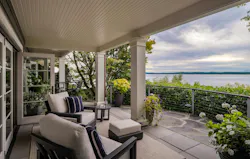
While the home's waterfront location served as design inspiration, it was also a challenge for the project team. Moisture management became a top priority when designing the exterior spaces.
“The exposure there is pretty high,” says Poole. “It's got a Southwestern exposure, and that's where a lot of our weather comes in, which makes it a fantastic place to watch the weather go across the [Puget] Sound, but we spent a lot of time thinking about that.”
When it came to the indoor-outdoor spaces, the team had to ensure the house was sealed properly. The outdoor bar that connects into the kitchen was one key problem-solving area. Poole says the goal was to keep it as refined and detailed as possible while still maintaining a weather-tight seal.
Material choices reinforced that strategy, with cedar shingles, aluminum railings, and concrete selected to withstand the site's exposure.