Why This Design Firm Is Doubling Down on Client Concierge Services
Key Highlights
- The is the "designer edition" of Builder in 5, our popular Q&A series with the minds behind great custom homes.
- Mancini Burns Design expanded their concierge services to offer more comprehensive project oversight.
- Early interior design decisions, especially regarding electrical and lighting plans, are crucial to avoid costly disruptions and ensure cohesive aesthetics, they say.
- The team says accessories and art are often overlooked vital finishing touches.

Builder in 5 is our five-question series with the minds behind standout custom homes.
In this edition, we're speaking with Bella Mancini and Taryn Burns, partners at Mancini Burns Design, a luxury interior design firm serving New York City and the Hamptons, Florida, and global destination markets.
1. You recently expanded your concierge services. What drove that decision, and how does that change the way you manage projects now?
Mancini Burns Design: Expanding our concierge services was a natural evolution for a boutique office like ours. We were increasingly involved in decisions beyond traditional decorating—construction management, coordinating moves and unpacking, and selecting art as well as practical and decorative accessories. Clients already looked to us as a trusted point of oversight. Formalizing that role allows us to be proactive rather than reactive while better serving the complexity of today’s projects.
Just as importantly, it allows us to work more intimately with a select group of clients. We’re able to have a hand in every aspect of the process, which leads to a more streamlined and thoughtful final result. That depth of involvement creates clarity, cohesion, and a level of trust that’s deeply rewarding. Many of these relationships continue beyond a single project, and we’re often asked back to collaborate on additional homes—something we see as the strongest measure of success.
2. What interior design decisions now need to be finalized earlier in the construction process? What's the biggest problem when they come too late in the project?
When these decisions come too late, the consequences can be costly and disruptive—especially if they are made after the walls are closed.
MBD: For the best result, interior design decisions should be considered early in the construction process—particularly electrical planning. This includes preparing for the weight, scale, and correct junction boxes for ceiling fixtures; thoughtfully locating outlets for table lamps and electronic charging; and planning dedicated lighting to properly illuminate art and architectural features.
When these decisions come too late, the consequences can be costly and disruptive, especially if they are made after the walls are closed. Beyond the practical implications, late decisions can dilute the overall cohesiveness of a space or compromise the design intent. Dovetailing interior design decisions with the earliest construction plans ensures that a space is both beautiful and functional.

3. What shifts are you seeing in how clients are actually living in their homes today, and how is that reshaping the spaces you're designing?
MBD: As daily life becomes increasingly plugged in, we’re seeing a real shift toward homes that quietly accommodate technology without letting it dominate the design. Discreet charging solutions have become essential, and we now consider them early in the process—integrating options like in-drawer charging at the bedside or slim profile charging strips within desks and work surfaces.
Planning for technology in this way keeps spaces highly functional while preserving a sense of calm and visual clarity, allowing the home to feel intentional rather than overtly tech-driven.
4. What material or technology trend are you seeing that's changing how you approach residential interiors?
MBD: One technology trend that’s changing how we approach residential interiors is advanced lighting systems, particularly tunable lighting like Ketra. We recently worked with a client who chose to use Ketra throughout their home—a sophisticated system that mimics natural light throughout the day but relies on proprietary bulbs that aren’t compatible with every fixture. This required us to rethink the lighting plan holistically, ensuring the system while allowing room for decorative lighting where personality matters most.
5. What's one interior design principle or detail that has outsized impact on how a home feels but often gets overlooked?
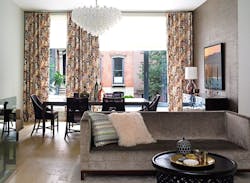
MBD: Accessories and art are often the most overlooked elements of a home, yet they have an outsized impact on how a space feels. They’re the final touches that make a home truly sing—nobody wants to look at empty bookshelves and bare walls. It’s natural for clients to experience budget fatigue toward the end of a project and choose to wait on these pieces, but they’re often what brings everything together. Thoughtfully layered art and accessories add warmth, personality, and soul, transforming a house into a lived-in, meaningful home.

For more insights from the field, read our earlier Builder in 5 interviews, and reach out with suggestions on who we should interview next.
You Might Also Like...
 Designer laying out a sample board of selections for a client
 Construction concierge walking through a modern interior (blurred image)
About the Author
Pauline Hammerbeck
Head of Content
Pauline Hammerbeck is head of content at Custom Builder, where she covers custom home building for builders, architects, and designers. She is also senior content strategist at Pro Builder, where she directs the brand's MVP Product Awards, and co-produces the Women in Residential Construction podcast, newsletter, and conference. Her background includes work in architecture, real estate, retail, and design.