Tech Clients Don't Want the Homes You'd Think
Key Highlights
- Tech homebuyers are typically in their 30s to 40s, seeking lifestyle upgrades and often building in better neighborhoods or away from city centers.
- They are highly involved in every detail of the design process, using tools like BIMx models to explore and scrutinize their homes thoroughly.
- These clients value clear communication, structured project management, and are accustomed to high standards of expectation and feedback.
- Surprisingly, many prefer homes with minimal smart technology, favoring simplicity and reliability over the latest gadgets.
- They focus on state-of-the-art building systems that ensure efficiency and comfort, such as backup energy and advanced mechanical systems, rather than flashy automation.
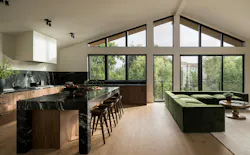
Tech-industry homebuyers building their dream homes today are not your average clients.
“Our construction document sets can be 160 pages long, [and] most of our clients don’t want to read through that,” says David Stone of Tim Barber Architects in Beverly Hills, Calif. “But our tech clients have always asked for the entire set. They read every line and they come back to us with questions.”
Who are these well-read clients, what’s it like working with them, and what do they want in a home?
On the surface, they want a home that reads as “dumb.” Behind the scenes, they want genius. Understanding that tension, and the underlying desires driving it, is the key to working with them successfully.
The tech client is seeking a lifestyle upgrade, or an escape
This person is typically someone in their mid-30s to early 40s, established in their career and clear on their priorities, building their next home as a deliberate step up, a lifestyle upgrade.
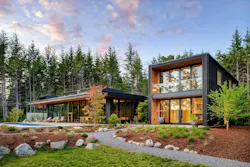
The household often comes with an extended support network. “We see a lot of immigrant community in the tech sector where parents will visit for months at a time,” Salehi says. “So we’re seeing a lot of multi-generational living and also au pairs and nannies—all the support systems that come with being busy, successful individuals.”
Some tech clients are building away from the city entirely, says Todd Smith of architecture firm Syndicate Smith in Leavenworth, Wash. “It's mostly those folks that are deep into it,” he says, referencing to the intensity of their careers. “That escape is necessary. They’re thinking about what is next after they complete their journey in the tech industry.”
The tech client is eager and involved
As the bridge between high-level strategy and technical implementation in their companies, tech executives need both an eye for detail and a mind for systems. Bringing that combination into the design space, you get a client who is involved in every aspect of creating their dream home.
MORE: What it takes to build for a globally-minded client
“It does require a different level of interaction than your average client. They want to know all of the details of the house versus just wanting to know the basic look,” says Stone. “They engage with us on the shapes, textures, colors, the hardware, the feel, and comfort of the home to a very interactive degree. We love working with them because of that.”
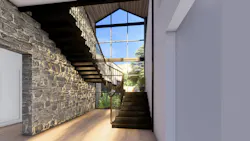
These clients are eagerly using all the tools they’re given.
“Having BIMx models that they can use to explore their project on a regular basis is something that our firm does for all of our clients,” says Esther Alva of the Los Angeles-based architecture and landscape architecture firm KAA Design. “But I think our tech clients enjoy it more. They really get in there. They look at the details, they think about the underlying systems of the home and how they are going to fold into the design. They want to know how everything’s coming together.”
These clients bring tech-industry norms to the design world
“We sense a best-practice level of communication with all of these clients,” notes Smith. “They talk about expectations, actionability, and what comes next. It’s very much treated like project management from their end.”
Tech clients aren’t shy about giving feedback, asking questions, or making requests. They bring a high level of scrutiny to the process, but with a collaborative attitude. “Sometimes it comes across as way too assertive, but I think it’s really great,” Smith says. “It’s very clear, succinct, and solution-oriented.”
“To someone who has not worked with this industry, it could feel a little [like] micromanaging,” Salehi says. “But you just need to be open and meet people where they are.”
Designing for tech client means adding structure to the process
Since tech clients tend to be more analytical, they appreciate a linear, well-structured process, says Brett Moyer of Richard Beard Architects in San Francisco. “How we respond to that is to show them a roadmap of our design meetings so they can see what we're going to present and when.”
It’s a fundamentally poetic thing to create a home for yourself, Moyer adds, but that’s not incompatible with good project management. “I don’t see that as exclusive to having a well-run project with accurate project management notes that reflect the decisions that are made,” he says, “providing them with pricing information from the contractor early and often.”
Tech clients are opting out of smart home technology
Given their profession, you might assume these clients would want the smartest home in the neighborhood. But that’s not necessarily true.
“Interestingly enough, our clients in the tech industry specifically ask to not have a smart home. They want something that's very simple and easy for them to live in,” Stone shares.
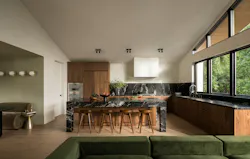
Clients who deal with tech all day long don’t want to come home and log into an app to change the lights. They don’t want to troubleshoot a whole-house sound system. A reliable dimmer switch on the wall and a simple Bluetooth speaker will do.
“They deal with tech every day. Some of them just want a really dumb house,” Salehi says.
These clients are also acutely aware of how quickly technology changes. Something that was all the rage ten years ago might be obsolete now—like built in USB ports, Salehi notes. “They don't really see the logic in building some system into their house that might be obsolete in a few years.”
But this doesn’t mean they reject technology for their homes altogether.
Tech clients want state-of-the-art building systems
“We do a lot of tours when our clients are picking a contractor, and our tech clients seem to love seeing the mechanical room,” says Moyer. “It’s a bit like walking into a chip factory. They’re usually very clean, very organized. They’re bigger than you would ever guess; they take over whole thirds or quarters of a basement.”
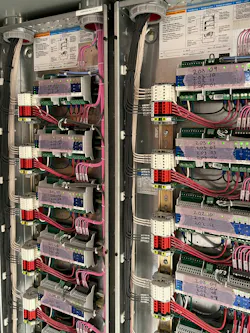
“I think our tech clients have a keen interest in making sure those building systems are state of the art,” Moyer says. “When it comes to how the homes operate, they seem to be leaning in hard to the technology.”
Some automations do appeal, like preset temperatures and humidity stats. Not smart home features, exactly, just background systems that lighten the homeowner’s mental load. “They’re being smart—no pun intended—about what makes sense and what would actually be functional.”
“They want to make sure they’re investing in the right systems,” Alva adds. “It’s the distinction between a tricked-out kind of home and just a home that’s genuinely intelligent.”
For the tech client, it’s about prioritizing what matters
A home that’s smart behind the scenes but simple to live in makes sense for this client. They need the infrastructure and technology that let them work and move through daily life comfortably, and a space that supports the rest.
“If you can create the most comfortable shelter but the most immersive experience into the outside, if you can sit in the space and just ponder and dream, it's really kind of a dry erase board for your soul,” Smith says.
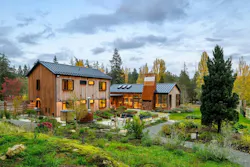
“It’s interesting to me that the more tech is integrated into our lives, there is a counterpoint to that, where our clients seem to be a lot more interested in things that are more real,” Moyer says. “We’re living in a world where AI can do so many things, and probably everyone’s using it, yet they seem to get the most excited talking about stone and wood or views from their window, and designing a home for reading or cooking or entertaining. They seem to be retreating a little into a more authentic, meaningful home life."
Related Reads:
 Designer laying out a sample board of selections for a client
 Construction concierge walking through a modern interior (blurred image)
 Great room interior of a Toll Brothers home
About the Author
Emily Zick
Emily Zick is a freelance writer and editor based in Ypsilanti, MI.