Resilience Has Long Mattered. Now It May Have a Price
Story at a Glance:
- Updated appraisal forms now include concrete data on renewable energy, high-efficiency features, and disaster mitigation.
- Certification programs like NGBS Green now incorporate resilience add-ons, supporting builders in implementing and verifying construction details that enhance durability.
- Research from organizations like IBHS emphasizes the importance of construction details such as sealed roof decks and wind-rated garage doors in reducing damage during severe weather events.
- These initiatives collectively aim to improve the visibility, valuation, and implementation of resilient and energy-efficient features across the housing industry.
Builders and architects don’t need to be sold on resilience and energy performance; they know these features matter. But historically, they haven’t shown up in places that concretely prove out their investment.
That may be starting to change.
At a meeting of the National Association of Home Builders' Climate Risk and Sustainability Committee during the International Builders’ Show in February, attendees heard a consistent theme from speakers representing mortgage, certification, and insurance groups: The housing system is getting better at capturing information about performance features and making progress toward tying them to home values.
Valuing Resilience, Literally
One development came from Sean Murphy, a credit policy risk analytics manager for Freddie Mac, who talked about changes to the Uniform Appraisal Dataset, the standard form for appraisals submitted to the mortgage market.
A new version of that form, which takes effect on Nov. 2, will now capture concrete information on energy-efficient and disaster-mitigation features:
- Renewable energy components (solar, wind, etc.)
- High efficiency features (windows, HVAC, etc.)
- Disaster mitigation features (flood vents, impact-resistant materials, etc.)
- Building certifications and ratings
Previously, a solar array or an impact-resistant roof might only appear in a comment field on an appraisal, which is easy to overlook and undervalue. The updated dataset makes these features more visible, and easier to track and compare.
Freddie Mac has been direct about why this matters. In a 2024 website post making the case for a central repository for home performance features, the agency said:
"If more comprehensive energy-usage performance data was available and transparent to the entire ecosystem–homeowners, borrowers, agents, appraisers and lenders–it would be reflected in appraised values, listing prices, sales prices and so on.
If data were available on the impact of such improvements … a homeowner could feel more comfortable that their listing price accurately reflects the investments they’ve made to reduce energy consumption."
Show Your Work: Documentation is Key
The appraisal profession has been working on this issue for years. Bill Garber, senior director of international growth and strategic relations for The Appraisal Institute, says the organization has been developing tools and training for more than a decade.
MORE: Coastal South Carolina Home Brings Resilience to the Forefront
One such tool is a Residential Green and Energy Efficient Addendum, a worksheet that allows builders and architects to catalogue and report a home’s performance certifications, ratings, and features across a range of categories, including indoor air quality, daylighting components, insulation values, and even features like rain gardens.
“Appraisers can’t support what they can’t document,” Garber says. “Cost breakdowns, incentives, and credible savings data from the construction community help illustrate market support for resilience and energy features.”
And while additional documentation responsibilities can feel like a burden, the upside is that reporting these performance features can have a very real impact on home values and downstream implications on factors like insurance.
Verification is Expanding
IBS attendees also heard about updates to the National Green Building Standard. Cindy Wasser, senior manager of green building programs at Home Innovation Research Labs, told the room that NGBS Green certification now includes “Green+” resilience add-ons covering wildfire, wind, water, and earth-movement resilience.
These programs are pursued in line with NGBS certification, Wasser said, not as separate processes. Such verifications matter because the types of construction details that offer resilience benefits, such as sealed roof decks or ember-resistant vents, are often invisible to appraisers during a typical inspection, she said.
A high-wind demonstration by the Insurance Institute for Business & Home Safety.
Mitigation Matters to Insurance
Alex Cary, market development manager for the Insurance Institute for Business and Home Safety's Fortified program was also on hand, talking about the organization’s approach to resilience, which isn’t about certifications, but on studying home failures.
The organization conducts laboratory and field testing on homes exposed to wind, rain, hail, and wildfire, and uses that data to make recommendations.
“We lead with the roof,” Cary said, “because it’s the first thing to fail [during an event].”
IBHS’ Fortified program translates that research into specific construction standards for roofs. The organization studies shingle aging, conducts hail testing, and evaluates the roof as a system.
Garage doors are the next critical point: when they fail, wind and water enter, and the structure itself becomes more vulnerable. Wind-rated garage doors are key.
Cary noted that 90% of homes whose garage door survives do not sustain roof damage in severe weather. Sealed roof decks and stronger roof-to-wall connections don’t prevent damage outright, but they reduce it. “Details make a big difference on performance,” she said. “Risk has a price.”
MORE: Designing for Recovery (Not Just Rebuilding) After Disaster
The program's relevance extends well beyond coastal hurricane markets. Tornadoes make it applicable across the interior of the country, and there are active grant programs designed to support roof retrofits in Louisiana, Alabama, Oklahoma, South Carolina, and North Carolina. Those funds flow directly to the builder, not the homeowner, she said.
Risk has a price.
- Alex Cary, Insurance Institute for Business & Home Safety
Mitigation, she said, reduces disruption, reduces financial loss, and can improve both the availability and affordability of property insurance.
What This Adds Up To
These initiatives are all independent parts in a larger ecosystem, but it’s clear that they’re all moving in the same direction.
Freddie Mac's appraisal updates create a direct line for performance features to affect home values. Certification programs are building a supporting layer to help bring visibility and assurance, and insurance research is uncovering which construction details actually hold up when conditions get severe.
For builders and architects, documentation of all these features is likely to become a standard part of the work. But the case all these speakers were making was that the designs and plans that get recorded have a better chance of being valued, implemented, and counted.
Related Reads:


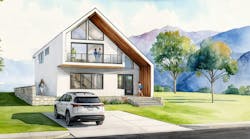 Exterior of the Altadena wildfire-resistant concept home by Essential Habitat Architecture
 Cedar Renditions Siding in the finish Aluzinc
About the Author
Pauline Hammerbeck
Head of Content
Pauline Hammerbeck is head of content at Custom Builder, where she covers custom home building for builders, architects, and designers. She is also senior content strategist at Pro Builder, where she directs the brand's MVP Product Awards, and co-produces the Women in Residential Construction podcast, newsletter, and conference. Her background includes work in architecture, real estate, retail, and design.