How a Rundown Garage Became a Functional Guest Suite

With a few structural fixes, Anthony Wilder Design/Build took this underutilized garage in Washington, D.C., and turned into a full guest house and at-home office

Story at a Glance:

  • The garage was transformed from a storage shed with small windows and steep stairs into a functional living space.
  • Structural updates included a roof replacement, insulation, air conditioning, and larger windows to improve comfort and natural light.
  • Reworking the staircase improved circulation and created a more accessible entry, enhancing connectivity to the main house.
  • Exterior design maintained historic elements like carriage doors and a dormer, blending traditional and contemporary styles.
  • This project exemplifies how ADUs can increase urban housing supply while preserving neighborhood character.

A Washington, D.C. couple knew they needed to make better use of a 1920s garage on their property. Rather than only using it for storage, they reached out to local design-build firm Anthony Wilder Design/Build to transform the space into an accessory dwelling unit.

With 450 square feet of space to work with, including a loft, the garage now functions as a home office and guest suite with a full bath and kitchenette.

“In the beginning, they just thought they'd put some air conditioning in there and call it a day," says JP Ward, lead architect for Anthony Wilder Design/Build. "But then they had bigger visions ... and what they wanted kind of snowballed."

Creating a Functional ADU

The floorplan of the garage stayed intact, with a 300-square-foot main level and a 150-square-foot loft, but the interiors were reworked around the homeowners’ needs. Previously used as a storage shed, the original garage had small windows, a concrete floor, and a set of stairs so steep it worked as more of a ladder than a staircase, according to Ward.

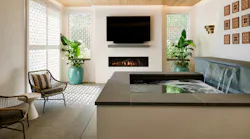
Now, the main floor has been reworked as the main living and sleeping area with a kitchenette tucked away beneath the stairs to save space. Above, the loft serves as an office with an attached full bathroom.

Addressing the Challenges

The project required structural corrections from the start. The roof was undersized and needed to be redone. Insulation and air conditioning were added for year-round comfort. And a larger door and new windows were put in to bring natural light into the space.

The staircase proved to be the biggest challenge, but reworking it became a happy accident in improving circulation. Moving it to wrap around the side wall helped combat the steepness of the former staircase. That shift also meant removing an entrydoor on the same wall, opening up the space and improving the connection to the main house.

“That changed the circulation,” says Ward. “Now, as they exit the main house and into the new [guest] house, it became a little more convenient for them as well, so that they could just come in the side door and go right up to the loft, or they could go into the space itself.”

Improving Connectivity

Moving the door helped improve interior circulation, but it also helped create a smoother connection to the main house. The homeowners wanted the guest house to reflect both the time period it was built and recent renovations already completed on the main house.

“We wanted to keep the exterior with the historic look,” Ward says.

Clad in a white lap siding with black accents, the exteriors blend contemporary and traditional design styles. A single dormer also pays homage to the time period the garage was built. While no longer in use, the former carriage doors in the rear were kept, Ward says, to preserve the original character of the structure.

But whether adding a new structure to a property or revamping an existing one, Ward says he expects to see more projects similar to this one as housing shortages push more markets to look at existing properties differently. 

"ADUs can address housing by adding units in single-family zones, boosting supply," he says. "They increase density subtly, maintaining neighborhood character, and improve affordability."

About the Author

Catherine Sweeney

Catherine Sweeney is the associate editor for Pro Builder and Custom Builder, where she creates both digital and print content, including Pro Builder’s daily e-newsletter and various news stories for both brands. Before joining Endeavor, she began her career in local journalism, later pivoting to the commercial real estate industry where she worked for several years as a reporter and editor.

Sign up for our eNewsletters
Get the latest news and updates