Bigger, Smarter: Wellness-Driven Bathroom Trends For 2026
Story at a Glance:
- Bathrooms are becoming larger to accommodate wellness features, storage, and universal design, with primary bath space a top priority for 89% of homeowners.
- Neutral color palettes, along with natural materials like wood and quartz, will dominate bathroom aesthetics in 2026.
- Smart technology, including intelligent showers, toilets with advanced features, and automated lighting, will be increasingly integrated to enhance relaxation and convenience
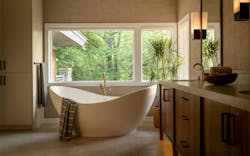
The bathroom is becoming a bigger focus for homeowners, with clients increasingly seeking out features that will turn their bathrooms into spa-inspired retreats. According to the National Kitchen & Bath Association’s 2026 Bath Trends Report, based on responses from 700 housing industry experts, this year's trends center on creating hospitality-inspired spaces, from the neutral color palettes to smart technology and more.
“Bath design is becoming deeply personal,” says Bill Darcy, global president & CEO of the National Kitchen & Bath Association. “Beyond considerations like resale value, designers are focusing on how spaces support a homeowner’s individual rituals, preferences, and self-care routines. This perspective encourages creativity, niche trends, and designs that truly reflect how people live today.”
Bathrooms Are Getting Bigger
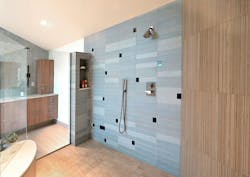
With this personal approach in mind, homeowners are seeking larger bathroom spaces in 2026. According to 72% of respondents, the overall bath footprint will increase to make room for wellness-centered features, storage solutions, and universal design considerations.
But more than size, layout matters. Bathrooms are moving from purely utilitarian spaces to spa-like retreats dedicated to physical and mental well-being. How space is used will be a top priority for clients in 2026, according to 89% of respondents.
More than half say the shower will get the most space consideration, even more than having a larger tub. Fifty-five percent say larger showers allow for spa-like features and amenities, including steam options, saunas, aromatherapy, chromotherapy, and integrated seating and shelving.
Calming Neutrals and Natural Materials
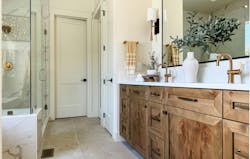
Expect clients to continue gravitating toward light neutral palettes and warm natural materials, especially wood. Nine-six percent of respondents say neutrals are the most popular colors, with off-white being most popular, followed by light brown, and then white.
Wood-faced vanities are also expected to gain popularity in 2026, according to 62% of respondents, compared with just 53% who say painted vanities will be more popular.
Expect natural or natural-looking materials to extend into other areas of the bathroom as well, including countertops. Quartz and quartzite options will be the most popular choices in 2026, according to 76% and 58% of respondents, respectively.
Using Technology to Enhance Wellness
As homeowners look to make their spaces more calming and relaxing, smart home integration is becoming increasingly common in the bathroom. Intelligent showers and toilets, lighting systems, and energy-efficient features can help streamline routines while enhancing wellness.
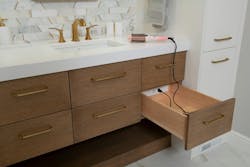
Integrated power outlets, for instance, are now considered standard in new primary bathrooms, according to 89% of respondents. Homeowners are also seeking toilets with advanced features—heated seats, automatic lid openers, adjustable air dryers, built-in deodorizers, and self-cleaning functions—with 76% of respondents noting these features are increasingly in demand.
Dimmable LED lighting is now standard for bathroom lighting as well, according to 72% of respondents, and 65% believe motion-sensor bathroom lighting will become standard within the next three years.
Beyond individual technology-enabled wellness features, design and construction firms should expect more clients to bring them design inspiration generated by artificial intelligence. Younger generations are leading this trend, with 87% of Gen Z respondents and 69% of Millennials using AI to explore layouts, material, and finishes.
But whether the inspiration comes from AI or elsewhere, wellness and technology—and especially technology that promotes wellness—will likely be at the core of bathroom design in 2026.
In Case You Missed It
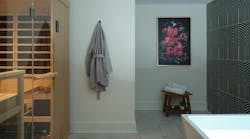 Home wellness studio
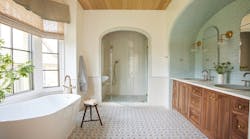 A large bathroom with freestanding tub underneath windows to the left and double wooden vanity to the right. In the back of the room is a shower with an arched entryway.
About the Author
Catherine Sweeney
Catherine Sweeney is the associate editor for Pro Builder and Custom Builder, where she creates both digital and print content, including Pro Builder’s daily e-newsletter and various news stories for both brands. Before joining Endeavor, she began her career in local journalism, later pivoting to the commercial real estate industry where she worked for several years as a reporter and editor.