How a Pennsylvania Architect Marries Client Goals With Passive Design Strategies
Builder in 5 is our five-question series with the minds behind standout custom homes.
In this edition, we're speaking with Richard Pedranti, founder of Richard Pedranti Architect (RPA), a Milford, Pa.-based architecture firm that specializes in passive house design. Pedranti shared how his approach to building custom allows him to deliver homes that are "both beautiful and evolved."
1. Tell us about your approach to passive house design. What’s one thing you would want others to know about working on these types of projects?
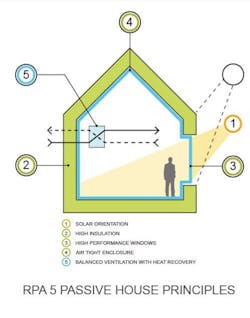
Richard Pedranti: We have identified five points to follow to achieve passive house levels of performance. These include careful site analysis with optimal solar orientation; increased thermal insulation; high-performance windows, usually triple pane; airtight construction; and balanced ventilation including an ERV (energy recovery ventilator).
Although passive house standards accommodate diverse residential design aesthetics, from traditional to modern, prioritizing geometric simplicity ensures peak thermal performance and cost efficiency.
2. When it comes to passive design, how have clients’ priorities changed over the years, and how has that changed the way you approach projects?
Pedranti: Our clients are looking for a more environmentally friendly approach to building a quality home. The passive house standard offers a triple bottom line: superior indoor air quality, exceptional comfort, and unmatched energy efficiency.
What is common is that, after they have decided that they are going to build a home, our clients want it done in the most advanced and responsible way possible.
We marshal modern building science, durable materials, and sustainable design to create a home that is both beautiful and evolved.
One of our clients, Declan, summed it up nicely when he said, “Once we decided to build a house, the only approach was Passive House!”
3. Tell us about a project where you took a design risk. How did it play out, and what can others take away from that experience?
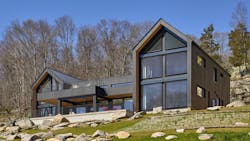
Pedranti: One of the biggest risks you can take in passive house design is having a significant amount of glass on the east or west-facing orientation. The low sun in the spring and fall makes solar gain very hard to manage. Glass on the southern side is easy to control because the sun is high in the sky and something as simple as an overhang can protect the interior climate from overheating.
To control solar gain on a home’s flanks [on one project], we worked with European suppliers of external motorized venetian blinds that offer precise control over light and temperature. Fortunately, it worked exactly as we had calculated, allowing for additional glazing around the home while mitigating solar gain in warmer weather.
4. What’s one decision you’ve made that defines how you design?
Pedranti: We believe that a happy client is the true measure of a successful project. We avoid preconceived design solutions; instead, we listen closely to our clients’ objectives and marry those goals with a rigorous site analysis to generate the final “form.”
5. What’s one detail you obsess over that clients might not notice?
Pedranti: Because our designs feature open layouts and expansive glass, we obsess over window installation details. We spend a significant amount of focus designing and detailing how the windows must be installed so every unit is perfectly airtight with good moisture management and without thermal bridging.
You Might Also Like
 cbbuilderin5

 Meadow House in Alta, Wyo.
About the Author
Catherine Sweeney
Catherine Sweeney is the associate editor for Pro Builder and Custom Builder, where she creates both digital and print content, including Pro Builder’s daily e-newsletter and various news stories for both brands. Before joining Endeavor, she began her career in local journalism, later pivoting to the commercial real estate industry where she worked for several years as a reporter and editor.