Michigan Architect on Designing for Everyday Living
Story at a Glance:
- Visbeen begins each project with a free live-design consultation to deeply understand clients' lifestyles and preferences.
- Visbeen says his experience in commercial design influences his focus on creating functional, efficient spaces that cater to real-world use.
- Visbeen advocates for live drawing during client meetings becasue he says it personalizes the experience and creates designs that actually reflect what the client wants.
- By paying attention to structural and visual details, such as optimizing room sizes and material dimensions, Visbeen Architects is able to ensure a smoother construction process and greater cost savings.
Builder in 5 is our five-question series with the minds behind standout custom homes.
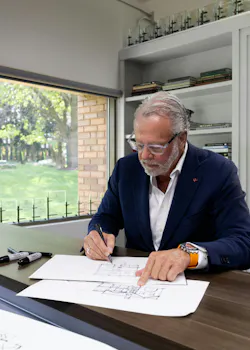
Up Next: Wayne Visbeen, founder and principal of Grand Rapids, Mich.-based Visbeen Architects. When it comes to designing luxury custom homes, Visbeen explains that its not the flashy features that set his designs apart—it's his ability to design for the client. From his live-design consultations to his background in functional commercial design, Visbeen shares how he makes every square foot matter.
1. Tell us about your approach to custom home design. What does your process look like?
Wayne Visbeen: My design process always starts with a free live-design consultation. At this meeting, I start by listening. I want to understand how the clients actually live—not just what they think they want in a house, but how they move through their days. Do they cook while entertaining? Do they need a quiet corner to work from home? How many kids do they have? What are their hobbies? That first conversation tells me more than any wish list could.
I also look at the site. On this particular piece of property, where does the light come from? What are the views? Are we dealing with zoning or building restrictions?
And the whole time we're talking, I'm drawing. The more I learn, the more customized the design becomes. We move from site orientation to initial floor plans and even exterior renderings. By the end of that first meeting, the client knows exactly what their dream home could look like, from every angle. Then, if they decide to work with us, we convert those initial sketches into digital floor plans, site plans, exterior drawings, and 3D models for construction.
2. Your early background is in retail and commercial design. How has that experience shaped your approach?
Visbeen: Retail and commercial design taught me to think about how people move through a space—how it functions, not just how it looks. In a retail environment, every square foot has a purpose. I carry that thinking into the homes I design. Does this kitchen actually work for the way this family cooks? Is the mudroom set up to handle four kids coming home from school, or does it just look good? Can the layout handle a dinner party and a lazy Sunday morning? Commercial work trains you to design for behavior, for what people actually do in a space, day after day.
3. What's an early career decision you made that still defines how you work today?
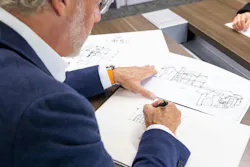
Visbeen: Early in my career, my boss told me never to draw in front of a client. He said, "Don't let them see how fast you think." I decided not to listen. My ability to design live, right in front of the people I'm designing for, is what makes me different. When a client says something in conversation, even if it's offhand, and I can immediately respond to it on paper, that's when they realize this isn't a cookie-cutter process. This design is all theirs. My decision to ignore that early career advice has shaped everything we do as a firm, including every single client experience.
4. What is a detail you obsess over that clients likely wouldn't notice?
Visbeen: I'm always designing with the build-out in mind. Every decision has to make sense visually and structurally. For example, I look for opportunities to make the home's natural flow work harder, using a main corridor as a single clean run for HVAC and electrical. I also size rooms and openings to work with standard lumber and product dimensions, so there's less waste and fewer custom orders on the job site.
I'm always designing with the build-out in mind.
- Wayne Visbeen, Visbeen Architects
5. What is a design risk you've taken that paid off?
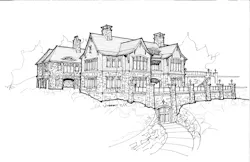
Visbeen: I was designing a remodel of a mid-century modern home. After adding a second floor to make more space for the homeowners, I felt like the updated elevation just didn't have enough presence. I knew we needed something more. So, I decided to carry the chimneys up an extra story and extend the second floor roof out like wings, capturing those chimneys and letting them float over the first floor. It made the whole house soar! The client wasn't sure about it at first. It was a bold move. But once the renovation was finished, that roofline became the defining element of the entire project.
That experience confirmed my hunch: when a design isn't quite right, you shouldn't play it safe. Sometimes you have to be willing to push the envelope.

For more insights from the field, read our earlier Builder in 5 interviews, and reach out with suggestions on who we should interview next.
Related Reads:


About the Author
Catherine Sweeney
Catherine Sweeney is the associate editor for Pro Builder and Custom Builder, where she creates both digital and print content, including Pro Builder’s daily e-newsletter and various news stories for both brands. Before joining Endeavor, she began her career in local journalism, later pivoting to the commercial real estate industry where she worked for several years as a reporter and editor.