NYC Designer on Leading With Collaboration

Builder in 5 is our five-question series with the minds behind standout custom homes.
Next Up: Philip J. Consalvo is a principal and founder of New York City-based architecture firm PJCArchitecture. Founding the company in 1988, Consalvo says the firm runs on teamwork. Here, he shares how collaboration and mentorship play a pivotal role in the firm’s process and how leading with collaboration helps his team work through even the toughest disagreements.
1. How does collaboration play into your design process?
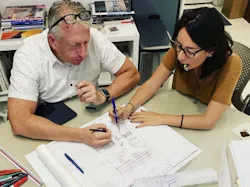
The strength of any project lies in the collective contributions of a full team: clients, architects, contractors, craftspeople, etc. Every design project is deeply personalized and we view each project as an ongoing dialogue grounded in the client’s needs and goals.
Internally, I’ve always found that the strongest design teams are led with a collaborative, empathetic framework. A design can absolutely be transformed by insights from even the most junior member of the team. I try to empower every staff member to take ownership of a certain element of a project, because that’s how we grow the next generation of design leaders. We hold charrettes to work through designs as a collective, and we visit our projects on-site to see how they are coming together.
We also believe that it is so important to work closely with local artisans, laborers, vendors, artists, photographers, on-site subcontractors, and other outside partners throughout a project. Their input has shaped our designs, and our perspective has in turn influenced how they practice their own trade.
2. Collaboration and mentorship are obviously important, but how do you handle disagreement? Does your open, collaborative environment help your teams resolve conflict?
That's a great question! Disagreements and strong feelings around design solutions are almost inevitable, and we’re always reminding each other to approach these conversations with an open mind and to leave our egos at the door.
Having an opinion and a real conviction about a design solution is a good thing. That said, design decisions are rarely made randomly. They're driven by a number of parameters, each set for specific reasons.
MORE: Seattle Builder on His All-In-One Approach to Custom Homes
When we disagree, we each take an option that’s on the table and work through it against a set of parameters to see which solution best addresses the challenges at hand. That process almost always gets us to the right answer. Because the whole team is part of it, everyone ends up invested in both the process and the outcome. It can get emotional, even heated at times, but that's because we care about the work and the firm. We trust the system, and it's served us well.
3. Your firm describes sustainability as a driving force in the design process. How do you integrate sustainability, and how does it guide decision-making?
We view sustainability as a direct extension of our human-centered approach.
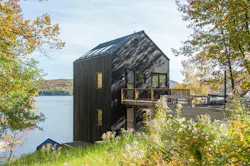
We believe that sustainability is a holistic concept and use a two-pronged approach to integrate it into our work. It begins with a careful study of site conditions, orientation, local climate, traditional building practices, and surrounding context. This influences our design in regards to ventilation, material selection, building performance, and resilience strategies.
We then consider our project’s impact on the community and the local economy. A socially sustainable project is one that supports its surrounding community by employing local laborers, fabricators, and investing in workforce skills. This strengthens the local ecosystem by circulating resources within the community, creating job opportunities, and reducing dependency on long-distance supply chains. At the neighborhood scale, sustainable design promotes walkability, access to green spaces, and inclusive public realms. To us, sustainability is a foundational framework that impacts every aspect of the design.
4. What’s a design risk you’ve taken that really paid off?
Under the leadership of my close colleague Nandar Godoy-Dinneen, we expanded our practice and established a design-build studio in Ecuador. I was initially taken aback by how different the construction process was. Designing a home in the U.S. comes with a completely different set of expectations and approval processes.
In Ecuador, we work with local building crews and develop ideas through on-site communication, allowing strategies to shift based on the availability of construction materials. As a meticulous planner through and through, it was hard to “let go” and learn how to make creative decisions along the way, but it has led to incredible results.
5. What’s a detail you obsess over that clients likely wouldn’t notice?
We obsess over every detail. We've found that all details, big and small, matter enormously in producing a genuinely excellent project. Typically, that obsession means our clients don't have to obsess over it themselves because we've already done it for them.
MORE: When a Builder and Architect Forge a Strategic Partnership
Overall, the majority of our clients are sensitive to good work and craftsmanship, which helps them understand the importance of detailing. They can usually tell right away what they like or dislike in a project.
We recently had a long, grueling job meeting for a large apartment renovation where we spent hours in each room reviewing the alignment of everything on the ceiling plan: lighting, air vents, moldings, smoke detectors, and speakers. That kind of exercise is crucial to a project, even if it can seem a bit over the top. The client questioned the time we were spending at first, but soon understood our obsession and embraced it.
Related Reads:
 cbbuilderin5javier
 Aerial of construction workers reviewing a plan
 cbjohn_cannonhomes
About the Author
Catherine Sweeney
Catherine Sweeney is the associate editor for Pro Builder and Custom Builder, where she creates both digital and print content, including Pro Builder’s daily e-newsletter and various news stories for both brands. Before joining Endeavor, she began her career in local journalism, later pivoting to the commercial real estate industry where she worked for several years as a reporter and editor.