Today's Spec Homes Go Custom, Long Before the Buyer Arrives
Story at a Glance:
- Builders are using detailed buyer profiles and brokerage insights to shape spec homes that meet high-end market expectations.
- Spec projects now focus on quality materials and site-specific design, challenging the negative perceptions of mass-produced luxury homes.
- Early buyer engagement and market analysis help reduce financial risks and ensure the homes align with client needs and market trends.
- Innovative approaches include building homes with flexible features, like elevator shafts without elevators, to save costs and allow customization.
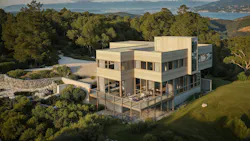
In Waccabuc, N.Y., Sam Fertik is framing an elevator shaft without installing an actual elevator. The house it would serve, Nº134, is a spec home—the first project Fertik’s firm, Carbon Custom Builders, is building without a buyer attached.
Whoever buys the home can choose to add the elevator later, which saves Carbon roughly $100,000 on equipment that the homeowner may not even want. It’s part of a larger decision Fertik is making throughout the project: What has to be finished during construction, and what can wait?
Spec houses ask builders to make the decisions a custom client would normally make, then carry the cost until someone agrees with them. What changes in a speculative project is where those decisions come from: a builder’s own experience, local brokerage feedback, and, increasingly, written buyer profiles shaping what gets built before anyone signs.
Deciding Who the Buyer Is

Moses Hershko envisions the owner beforehand on his projects. Before design advances, the founder of Moses Hershko Development writes down who he thinks will buy—family or single, athlete or entertainer—the lifestyle they want, and what they can spend, and then tests every decision against that person.
"When I do a spec home, I have the buyer in mind," he says. "That profile directs the early choices without making the house dependent on one person."
His Longevity Estate in Hillsborough, Calif., for instance, speaks to a wellness-minded buyer, with a hyperbaric chamber, a red-light therapy wall, an infrared sauna and other wellness systems designed into the architecture.
That understanding of client needs can also come from the other side of the transaction.
Real estate broker Santiago Arana, principal and managing partner of The Agency’s Brentwood and Pacific Palisades offices in the Los Angeles area, has spent more than two decades selling luxury real estate. He’s also developed five multi-million-dollar spec homes, including his most recent project, a 20,000-square-foot residence on Tigertail Road currently listed for $54 million.
That dual vantage point helps shape what he builds.
"I put so much thought into what people want and the current needs of the consumer. You're basically customizing a home to a buyer's behavior,” he says. “COVID really changed that whole approach to how people live."
Selling gives him a direct view of how clients react to floor plans, materials, pricing, and lifestyle needs. That perspective has become increasingly valuable to builders and developers before they break ground on their own spec projects. The agent’s opinion, Arana says, now carries weight that it didn’t before.
The term “spec home,” he admits, can have a negative connotation for the high-end buyer; it’s sometimes associated with poor quality and lackluster design. Even at the top of the market, not every spec home is built to high standards.
That’s changing, though, Arana says. Buyers respond to residences that are tailored to their site and price range and pass a close inspection. Ultimately, it's about quality and what will last, and Arana personally considers each of his spec homes a custom project.
“Today's builders install expensive doors, outlets and hardware,” Arana says. He adds that real wood and natural stone carry more weight than a house made to look expensive through surface treatments alone.
Who’s Building Spec Homes Now
Fertik has seen the same shift in what his clients are asking for.
"Gone are the days when the bars, cigar lounges, and bowling alleys were the most important amenities," Fertik says. Now his clients care just as much about their home environment, asking about water, microplastic exposure, and air quality.
Custom commissions remain Carbon's primary business, but the firm's first spec home, Nº134, what the firm calls a signature residence, is set for completion in 2027. Fertik calls it "a house for a customer that we just don't know yet," built on the same concrete-and-steel system the firm is known for.
He argues that the building industry stopped improving or innovating over time. "We've been building houses in this country the way George Washington built his house, and we haven't changed it," he says. What he wants to prove: "It can be a spec home without being spec garbage."

It’s not just the builders and brokers getting in the mix. Some firms are built around spec from the start. Miami-based Sunland Group, founded by Naoshi Matsumoto in 2015, is a vertically integrated spec developer, with in-house architecture, construction, and brokerage firms.
Waterfront residences built for sale are the firm's principal focus, and its internal teams all participate from acquisition through closing. Matsumoto says the arrangement lets the company coordinate permitting, procurement, subcontractors, and construction starts around its own pipeline rather than individual clients' schedules, which loads work evenly across several houses and gives trades visibility into jobs that have not broken ground.
Gone are the days when the bars, cigar lounges, and bowling alleys were the most important amenities.
- Sam Fertik, Carbon Custom Builders
A custom commission takes the opposite approach. "With a custom home, the client becomes an essential part of that starting point," he says, which means early hours spent on how a family lives and entertains, then the work of turning all of it into something coherent that still holds its budget.
Casa Vanda, Sunland's latest project listed for $10 million, sits along the waterfront with a private 50-foot dock. With tropical modernist architecture and views of Miami, it occupies a prime parcel of land.

Controlling Financial Risk
Matsumoto looks at recent sales, active competition, new construction, and a neighborhood's lasting potential before working through total development cost, financing, timing, and the expected sale, all of it ahead of any architectural direction.
"We do not begin by falling in love with a design," he says. Buyers arrive attuned to the details, expecting quality architecture, construction, technology, and materials, which he describes as a refinement of priorities rather than a reaction to every new trend.
Because the firm also works as the builder, Sunland takes on the financial risk of a spec home. To protect each new property purchase and investment, Matsumoto runs the numbers, comparing it against higher costs, delays, longer marketing periods, and lower sale prices before the firm commits.
"We proceed only when the expected return justifies the risk and the project remains viable under less favorable assumptions," Matsumoto continues. The firm holds several parcels at once, which lets land appreciate while it decides which one to start, and when.

His firm also operates an investment platform that allows accredited investors to participate in select developments, and he concentrates on what he calls unbreakable locations, where land is scarce, or entry is restricted.
Carbon Custom Builders spreads its exposure differently, running client commissions, spec, and development at once. "I look at everything as a little bit of a hedge," Fertik says.
Advice for Builders
Staying current and developing or designing your first spec home should reflect the taste of whoever writes the check, Arana says.
And timing of a spec home is key. Arana says owner-led custom projects can take five or six years, long enough for children, jobs, or household needs to change before move-in. Many buyers would rather purchase a completed or nearly finished property, spend several months adapting it, and start using it. "It's just like a new car," Arana says. "You go in, and you drive it."
For a first-time spec, using a broker's insight is a free, easy glimpse into the mind of a buyer, he says. But the buyer should ultimately be defined by neighborhood and price, not aspiration, and the site should determine the main architectural moves.
Related Reads:
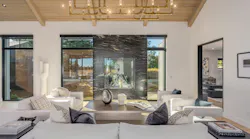 Interior of 601 Napa Road by Douglas Elliman
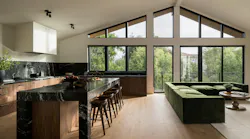 Interior of a Washington residence by Mahya Salehi Studio
 Builder in 5 logo | Wayne Visbeen
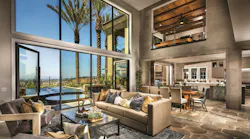 Great room interior of a Toll Brothers home
About the Author
Emma Reynolds
Emma Reynolds is a New York City-based freelance luxury writer who covers travel, real estate, design, architecture, and more. Her works has appeared in Forbes, Robb Report, Elite Traveler, Business Insider, Mansion Global, and many more.