The Case for Bringing Fabrication In-House
At a Glance:
- Escobedo Group, Marmol Radziner, and Dyna Builders have metalwork, millwork, and other custom fabrication under their own roofs.
- Startup costs vary widely, from roughly $75,000 for an architectural metal shop to $2 million+ for a larger operation.
- The firms value in-house shops for greater control over craftsmanship, schedules, design coordination, and responsiveness (not necessarily as profit centers).
- Domestic fabrication can reduce exposure to shipping delays, tariffs, and overseas quality-control challenges.
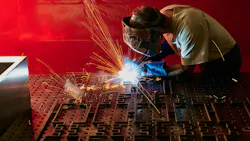
The only thing better than finding a skilled fabricator to make a customized product or system is not having to search for one in the first place. Some builders and architects have successfully brought fabrication in-house, whether it’s metalwork, millwork, woodwork, stonework, or even artwork.
Three residential building and design firms in Texas, California, and Washington share how they made the move to in-house fabrication, what it cost to set up, and how it has changed their control over quality, schedule, and margins.
Texas-based luxury home builder Escobedo Group self-performs 75% of its builds in a 60,000-square-foot facility located on 11 acres south of Austin.
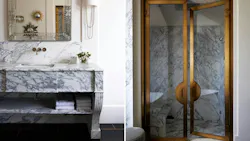
In addition to in-house stonework and millwork, the builder rolls its own light-gauge steel studs and fabricates full wall, floor, and roof panels with a panelized system it has developed. “Self-performing a majority of our builds assures our clients get the quality they expect as everything is being made in the same facility and being overseen by our own employees,” says CEO David Escobedo.
Marmol Radziner, an architect-led design-build practice in Los Angeles has a 31,000-square-foot, full-service fabrication facility in Hawthorne, Calif.
“We started doing fabrication in-house over 30 years ago to have full control over quality, schedule, and cost for our clients,” says Mike Patterson, vice president of construction at the firm. “We also believe that having fabrication expertise in-house makes us better architects and builders, because we have a more tangible and direct connection to the way things are being built in the shop.”
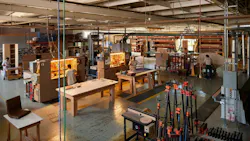
The shop fabricates cabinetry; carpentry elements such as doors, wall paneling, and furniture; and metal components, including ornamental architectural metals, sheet metal, and sculptural art pieces. In addition to a team of skilled wood and metal craftsmen, the shop uses digital fabrication tools including a CNC machine, vacuum press, and laser cutter.
Seattle-based Dyna Builders opened its metal shop in 2005 to have more control over the quality, craftsmanship, and execution of the custom metalwork going into its projects. “We were doing increasingly sophisticated homes with unique architectural details and structural components,” says Ren Chandler, president and founder of Dyna Builders.
The shop works primarily with steel, stainless steel, brass, and aluminum, and its projects range from custom staircases, railings, and fireplace surrounds to structural steel components, awnings, and decorative metalwork.
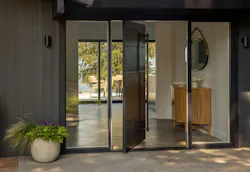
“Bringing that expertise in-house allowed us to collaborate much more closely with our architects, designers, and construction teams,” says Chandler. “Rather than sending drawings off to a subcontractor and hoping everything comes together, we can work through the details together, develop solutions, and adjust as needed.”
While much of Dyna’s work supports the firm’s residential construction projects, it also fabricates for other builders, architects, and designers.
A Scalable Investment
The financial investment of bringing fabrication in-house depends on exactly what you are fabricating, as well as the scale, personnel, and equipment needed, says Escobedo.
However, the investment doesn’t come without liabilities, he adds, and that’s why so many contractors steer away from this approach to construction. “If you're going to open a millwork division or metals, you need enough work at all times to keep everyone busy,” he says, “which is just an added layer and overhead that brings more risk to the business.”
If you're going to open a millwork division or metals, you need enough work at all times to keep everyone busy
- David Escobedo, CEO, Escobedo Group
Patterson estimates the cost of setting up Marmol Radziner’s fabrication operation at $2 million to $3 million when factoring in equipment, machinery, forklifts, ventilation and dust collection systems, racking systems, software, and electronics.
MORE: Seattle Builder on His All-In-One Approach to Custom Homes
But it is a scalable enterprise depending on the scope of work you intend to take on, says Chandler. “I think you could establish a reasonably well-equipped architectural metal shop for somewhere in the neighborhood of $75,000 to $150,000,” says Chandler, “although you could certainly spend considerably more depending on the equipment and capabilities you're looking for.”
The Value of Control
Fabricating in-house has greatly increased Marmol Radziner’s control over quality and schedule, says Patterson, while also supporting its design-build company culture.
“Our motivation … was not based on profit margin but rather was born out of a desire to fabricate components at a higher level of quality, and on time, while also feeding real time fabrication knowledge back into our design and construction operations,” he says. “For us, that is the value our shops add to our business, more so than profit margin.”
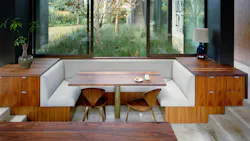
Having its own metal shop has given Dyna Builders significantly more flexibility to prioritize work, respond to changes, avoid bottlenecks, and coordinate installations around the overall construction schedule, says Chandler.
He notes that while there's an opportunity to capture revenue that would otherwise go to subcontractors, operating a fabrication shop comes with its own overhead, equipment costs, and staffing challenges. “We've never viewed the shop primarily as a profit center,” he says. “For us, the real value is the control it gives us over the process and the quality of the finished product.”
We've never viewed the shop primarily as a profit center.
- Ren Chandler, Dyna Builders
Domestic Demand
All three firms see advantages in fabricating domestically, particularly as tariffs and fuel costs affect overseas sourcing.
“Fabricating a majority of our builds in our facility has allowed for less volatility in prices than those sourcing from overseas,” says Escobedo. “And not having the cost and typical delays of transport is also something our clients and team value.”
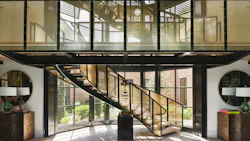
Domestic fabrication also allows Marmol Radziner the chance to review mockups and samples and have in-person conversations with craftsmen, designers, and clients in real time. “Fabricating domestically is critically important to that process,” says Patterson.
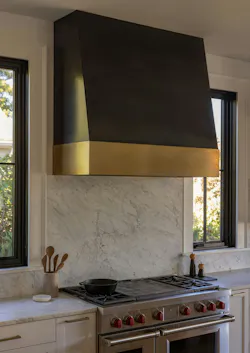
While Dyna's shop is a significant part of their operation today, it started on a much smaller scale. “Our bookkeeper's husband was a retired metalworker who had some equipment and tooling and wanted to continue working,” says Chandler. “It seemed like a great opportunity, so we brought him in and started doing some of our own fabrication.”
Chandler offers some advice for builders considering adding fabrication to their portfolio. “Start small, find the right person, and let the business grow organically,” he says. “The equipment is important, but the talent and expertise of the people operating it are really what make it successful.”
Related Reads:


About the Author
 Rita Orrell
Rita Catinella Orrell is a journalist specializing in architectural, interior, and consumer products. She is contributing products editor to Texas Architect and is a former products editor for Architectural Record. She has written for publications including The Architect's Newspaper, Oculus, Metropolis, The Comm Sheet, and Upstate House. Rita lives in Narrowsburg, N.Y., where she contributes to The Sullivan County Democrat and The River Reporter.
Related
 Artist painting a wall mural inside a home