How Builders and Designers Find and Work With Small Makers
Key Highlights
- Trusted trade referrals, client recommendations, social media, and open studios can help teams discover the right maker.
- Custom work can take longer than standard products, so involve makers early and coordinate schedules.
- Designers can guide clients toward custom details that express a home’s character or respond to specific conditions.
- Knowing who made a piece (and how) can deepen clients’ connection to their home.

Custom Builder’s Made to Order series profiles makers and fabricators that builders, architects, and designers can turn to for local, hand-made, or one-of-a-kind pieces. This installment looks at how project teams can work with these small, specialized shops. We asked six builders, architects, and designers how they find makers and develop relationships with them, how lead times compare with catalog products, who drives the decision to go custom, and why the maker's story matters to clients and the project team.
Finding the Right Maker
When it comes to finding the right custom fabricator, a word-of-mouth recommendation from another trade—a framer, tile setter, or lighting rep, for example—is a good place to start.
“A maker recommended by a trade I trust has already proven they can show up, measure correctly, and meet a deadline,” says Lauren Lerner, founder and principal designer of Living with Lolo, who works in the small but high-end residential world of Scottsdale and Paradise Valley, Ariz., where referrals carry real weight. “Instagram is also useful for discovery, and I often find unique makers while traveling.”
Sometimes the lead comes from the client. Allen Patterson, founder and president of Allen Patterson Builders in Beaufort, S.C., learned about Grothouse, a Pennsylvania-based fabricator of custom wood countertops, butcher blocks, tables, and architectural wood surfaces, from a client who also happens to be an interior designer.
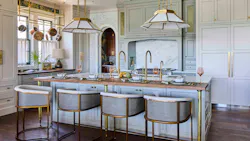
Jonathan Knapp, a graduate of the American College of the Building Arts and founder of KnappCo, a residential building practice in Charleston, S.C., specializing in timber framing, architectural carpentry, and custom residential construction, says a lot comes down to these kinds of relationships. In Charleston, “there's a well-connected community of architects, builders, and craftspeople doing thoughtful work, and they tend to know one another,” he says.
Karen Curtiss, principal at Red Dot Studio in San Francisco, likes going to open studios and meeting with makers directly, some of whom are her neighbors.
“We like tinkering and experimenting,” says Curtiss. “That led us to house our offices in a now-defunct space with other makers. We've tapped some of those makers to work with us on projects large and small.”
It’s not always easy to find the right match, however. Karin Payson, of Karin Payson architecture + design in San Francisco, feels lucky to work in markets with a deep bench of custom builders.
“Nonetheless, in recent years it has become increasingly challenging to find specialized small shops,” she says. “Many highly skilled makers have retired, and fewer are replacing them.”
Order Early On
Custom pieces need more time to make and deliver than standard products. “Lead times vary with the complexity of the work and the maker's availability,” says Knapp. Involving craftspeople in the design process “gives everyone time to work through details, establish realistic expectations, and coordinate the work with the larger construction schedule,” he says.
On the maker side, John Sorensen-Jolink, designer and founder of Coil + Drift, a lighting and furnishings studio in Jeffersonville, N.Y., often adds two to four weeks onto the standard lead times for customized orders.
“Since we craft everything in-house at our Catskills workshop, we can often tell them exactly why something will take longer than usual,” he says.
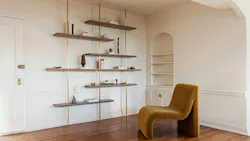
Payson says designing custom pieces such as railings, gates, and furnishings is a normal part of her firm’s process.
“In these cases, we are more likely to compare custom shops and choose a maker based on a number of factors, including quality, the shop’s availability, and their pricing,” she says, adding that lead times for standard items can be long enough that a good local shop can compete on schedule.
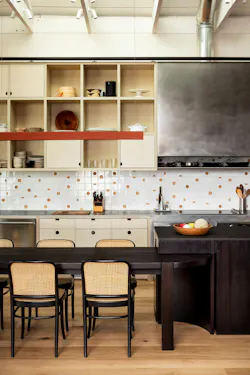
When the design process integrates into larger project elements, you will need to account for more time and coordination between fabricators,” says Curtiss.
On Red Dot Studio’s House Social project, for instance, the firm designed a kitchen island and dining table in tandem with furniture designer Yvonne Mouser, who developed several concepts. After the client picked one, the firm coordinated the cabinets and layout around it. Mouser then worked out the table’s finish and materials with cabinetmaker Mark Bonomi, who used her panels to skin the island.
Lerner says the most common timing error is ordering custom pieces last and that builders and designers should plan for roughly two to three times the lead time of a standard item.
“Because we handle design and construction under one roof, we lock in custom pieces during the design phase, not after framing, so they arrive before the trades need them,” she says.
Investing in Experience
While the idea for a custom piece on a project can originate from the client or the firm, Knapp says clients often look to the designer or craftsperson to guide those decisions.
“While a client may have a general idea of what they want, part of what they're investing in is someone's experience, judgment, and understanding of what's possible,” he says.
Lerner sees the same pattern at her firm. She says three or four handmade pieces in a home, like front-door hardware, a statement fixture, and a glass element, can make a home feel unique.
“Most clients don’t walk in asking for a hand-forged pull or a custom sconce,” she says. “They tell us how they want the house to feel, and we identify the key places where a made-to-order piece will best convey that feeling.”
Curtiss says the approach works only with clients who want to engage with design and work with an artisan, and with “a firm willing to integrate other design voices while holding the overall vision.”
Customization isn't always about aesthetics or personal preference, either, says Knapp. “Sometimes it's the most appropriate response to the particular conditions of a building, especially in renovation and preservation work,” he says.
Telling a Story
When the maker’s story matters to clients, a domestic workshop makes it easier to know exactly who made the piece, as well as where and how. “People naturally enjoy having a personal connection to the things they surround themselves with,” says Knapp.
Lerner says that connection changes how clients live with the piece. “When a client knows the person who poured the glass or forged their door pulls, the object stops being just a finish and becomes part of the home's history,” she says. Knowing the maker provides accountability as well. “If a latch needs adjusting in five years, they know who to call,” she says.
Sorensen-Jolink says it depends on how the project team defines value. “To us, lighting and furniture are valuable because they hold stories and memories,” he says. “We, as the designers and makers, love to be part of these stories and people who are drawn to us find that exciting."
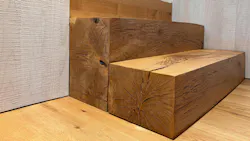
Buying local is another consideration. “We work with fabricators in our region, using local materials,” says Curtiss.
Clients are also drawn to owning a one-of-a-kind piece. “Our clients love knowing their pieces are unique to them, not stamped out by the dozens or thousands,” says Payson.
Architects and builders benefit from the process too. Everything we build starts with taking something from the environment and then making,” says Curtiss. “When we order products instead of understanding materials, we might forget our role in the process of making,” she says. “Working with a community of makers brings more immediacy to the act of taking, knowing the clay comes from the earth to make tile, wood from the forest, etc. The making becomes something more sacred and the architecture gains meaning.”
More Makers:
 Phases Collection | Rocky Mountain Hardware


About the Author
 Rita Orrell
Rita Catinella Orrell is a journalist specializing in architectural, interior design, and consumer products. She is contributing products editor to Texas Architect and is a former products editor for Architectural Record. She has written for publications including The Architect's Newspaper, Oculus, Metropolis, The Comm Sheet, and Upstate House. Rita lives in Narrowsburg, New York, where she covers local news for Sullivan County Democrat and The River Reporter.
Related

 Jewel Box Cabin exterior by Imprint Architecture + Design