To Fill the Labor Gap, Build an Industry Worth Choosing
Construction is facing a labor crisis, with an estimated 456,000 new workers needed in 2027, according to Associated Builders and Contractors. But what nobody is talking about is how much of our hiring problem is self-inflicted. We’ve been stagnant in how we build (still building the way George Washington did, in fact), and it's costing us younger talent. When other industries are offering new ideas and more dynamic ways of working, a job site still running the way it was decades ago is a hard sell.
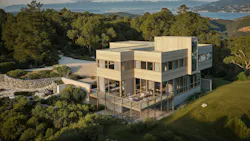
I started Carbon Custom Builders in 2020 with a simple mission: to build better. With the accelerating impacts of climate change and extreme weather, I believe the traditional wood-framed home simply isn't cutting it anymore. We bring commercial-level thinking to single-family residential, using concrete and steel to create healthier, more resilient homes.
In my experience, the next generation of professionals will come when we give them a field worth being excited about, one that builds differently, uses better tools, and gives them a hand in shaping how the work gets done.
What Does the Next Generation Care About?
The construction workforce of the future will look different from the one preparing to depart, and our recruitment strategies need to shift to attract a generation with very different priorities. Emerging professionals have learned to adapt rapidly to change and are continuously seeking new opportunities for learning. They’re also looking for careers that give them a sense of purpose and enable them to make a meaningful contribution to society.
A job site still running the way it was decades ago is a hard sell.
At our firm, our values have become one of our strongest recruiting tools. For many of the people we hire, the chance to build homes that support the health of the families inside them and the environment around them is a big part of why they say yes. Builders across the industry can lean into the same idea by embracing the opportunity to shape a healthier, more sustainable built environment.
Opening the Door to New Kinds of Builders
Creating a more dynamic industry also means looking to people who might not have pictured themselves in construction. I came to this work as a chef trained at the Culinary Institute of America with a background in corporate catering, and I draw on skills learned in my former career every day.
I still look at new recruits the way I looked at line cooks: I can teach technique, but I can't teach someone to care whether the plate is right when nobody is watching. I want people who are bothered by sloppy details, who ask why, and who take real pride in their work.
I can teach technique, but I can’t teach someone to care whether "the plate" is right when nobody is watching.
Because we build differently than most residential firms, I don't need someone with 10 years of stick-framing experience. Some of our best people come from industrial trades or engineering backgrounds, because they already think in terms of systems and tolerances. When I interview someone, I want to know how they handle things when something goes wrong. Do they own it and bring forward a solution, or do they explain it away?

A Job Where You Keep Learning
The next generation is seeking a career where they can keep growing, and complex construction work can give them that. No one at our company learns about a job site from a textbook. Most training happens live on the project, backed by plan review at our main office in New Canaan, Conn., regular site walks, and coordination calls with our subs and engineers.
Our trade partners teach us, too. They're specialized craftspeople, and understanding their own processes is how we get to the best result together.
We work with a trusted network of specialty subcontractors and train our own team to be the most informed people in the room, the ones who ask the sharp questions, and catch problems before they're poured or welded in.
Using Technology to Train and Align
As digital natives, the next generation of professionals expect modern tools that reduce administrative headaches and open up more room for innovation. Autodesk Build is our central hub, housing everything from 3-D models and exploded diagrams to RFIs, submittals, and daily site reports. Architects, engineers, and subcontractors all work from the same information, and we review sheets and models live during owner-architect-contractor meetings so decisions get made and documented in real time.
For newer team members, this system is one of the best training tools we have. Seeing a complex concrete or steel detail in 3-D before walking the site helps people understand what “right” looks like and spot conflicts early. We pair the model with 3-D scanning of the site, which links the digital plan to what is actually being built, and each project's data feeds lessons learned into the next one.
I’m also encouraged by innovations we’re seeing across the industry right now. ICON, a construction technology firm in Austin, partnered with Lennar and used a robotic printer to build an entire 3-D-printed community in Georgetown, Texas.
Digs, the software platform, can turn a standard 2-D floor plan into a 3-D digital twin using computer vision. Tools like these give emerging professionals skills that are increasingly valuable, and they show young people that construction is an industry where new ideas actually get built.
Giving Builders a Seat at the Table
We also need to advocate for greater respect within the larger architecture, engineering, and construction community. Construction has long operated within deep-seated hierarchies that place builders at the end of the decision-making process, after the major choices have already been made.
But, as we all know, builders bring enormous value when they're brought into the conversation early. When they're left out, collaboration and coordination lag and the risk of delays and cost overruns increases exponentially, and the blame historically lands on the builder.
For someone weighing a career in this field, that dynamic signals that their expertise will be overlooked. If the industry brings builders and their trade partners in as true partners from the start, we can create a more equitable and desirable career path for the next generation. At Carbon, that's why we invest so much in coordination with our architects, engineers, and subs from the start of every project.
What I'd Tell Other Builders
Carbon is a young company, and people feel that in a good way. Whether they've been along for the ride since the beginning or just joined us, our team values being part of something that is still being molded. Their ideas matter, and they can see their fingerprints on how we operate and execute.
Their ideas matter, and they can see their fingerprints on how we operate.
If we want the next generation to choose construction, we have to give them an industry worth choosing. That means building with better methods, putting modern tools in people's hands, and treating builders and trade partners as true partners in the work. It’s time to stop building the way we always have.
Related Reads:

About the Author
 Sam Fertik, Founder & CEO, Carbon Custom Builders
Sam Fertik is the CEO and Founder of Carbon Custom Builders, a firm pioneering a new standard in sustainable luxury homebuilding across the Northeast, South Florida, and beyond. The firm is driven by a mission to build stronger, safer, and more energy-efficient homes without compromising design or craftsmanship. Under Sam’s leadership, Carbon Custom Builders has earned a reputation for obsessively better built homes that marry cutting-edge building science with uncompromising design, quality, health and safety.