An LA Founder on 42 Years of Design-Build, And Where the Integrated Model Shines
Story at a Glance:
- Bill Baldwin shares how an integrated design-build model reduces surprises and change orders during construction.
- He shares how older homes guide the firm's modern designs by revealing enduring materials and craftsmanship.
- Baldwin says close collaboration among clients, designers, and builders minimizes misunderstandings and mitigates risks inherent in traditional design-bid-build.
Builder in 5 is our five-question series with the builders, architects, and designers shaping custom residential work.
In this edition, we're speaking with Bill Baldwin, founder of HartmanBaldwin, a design-build studio in Los Angeles where projects range from custom homes to restorations and large-scale remodels. Baldwin says the firm focuses on architecture rooted in craft and built to age well.
1. What's a mistake that doesn't happen when design and construction share the same roof? Something that might slip if teams are separate.
Bill Baldwin: Honestly, every project we take benefits from our integrated design/build approach, but let me give you a sense of where it matters most.
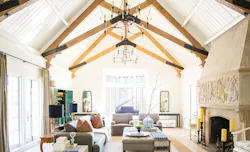
One of the greatest advantages of this model shows up during estimation. When design and construction live under the same roof, our estimators aren't just pricing what's on the drawing, they're pressure-testing the entire project. That process becomes a built-in quality check, surfacing missing components, unstated assumptions, and peripheral costs that could otherwise quietly derail a project's budget, timeline, or feasibility.
Over 42 years in this business, our estimation process has grown into something far more nuanced than a line-item spreadsheet. Even in the early conceptual design phase (before every detail is resolved) our team draws on decades of experience to anticipate what a project actually costs to build, not just what's been documented so far.
This is where homeowners often get caught off guard in a traditional model. A contractor bidding from an incomplete set of plans has no obligation to flag what's missing. Items that aren't explicitly drawn or specified like landscaping considerations, future solar infrastructure, city-required studies, or repairs elsewhere in the home that the project will inevitably touch simply don't show up in the bid. And then they show up in the change orders.
With our integrated approach, those conversations happen early, when they're still just conversations, not costly surprises.
2. California tends to be where building standards get tested. What are you navigating now that the rest of the country will be dealing with soon?
Baldwin: California has always been something of a proving ground and this past year made that clearer than ever. The wildfires that swept through our region were devastating on a scale that's hard to fully articulate, and they've fundamentally shifted how we think about designing and building homes.
What we're navigating now is a genuine evolution in resilience-focused design. Local jurisdictions are updating requirements in real time, and our team has had to stay ahead of those changes while also helping clients understand what they mean in practical terms because building to a higher standard of fire resistance, structural durability, or environmental resilience comes with real cost implications. That conversation requires both honesty and context, and it's one we've gotten much better at having.
Much like the lessons we carried out of the pandemic, this moment has pushed us to sharpen our internal processes, deepen our expertise, and communicate with even greater clarity and transparency throughout a project. Difficult chapters have a way of doing that.
These aren't California problems for much longer. Extreme weather events are becoming a shared reality, and the building standards, design strategies, and client conversations we're having today will likely be commonplace everywhere within the next decade. We're already living in what others are preparing for.
3. You say working on 80+ year old homes can be revealing. What do you find inside them that changes decisions on new builds?
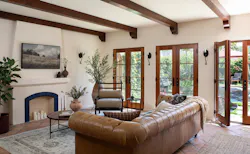
Baldwin: There's something deeply instructive about opening up a home that's been standing for a century. You see immediately why it has lasted. The quality of the materials, the integrity of the craftsmanship, the thoughtfulness behind decisions that were made to endure rather than simply to impress. Those homes carry a kind of accumulated wisdom, and we bring that perspective directly into how we approach new design.
We believe the fundamentals of great architecture are timeless. Proportion, detail, material honesty these aren't trends, they're the reason certain homes still feel relevant and alive generations later.
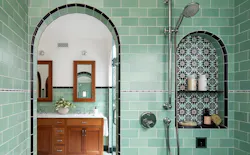
The fear of losing what made a home special in the pursuit of modern convenience is something we hear often, and it's a completely legitimate concern. After 42 years, we've built a team that knows exactly how to navigate that balance. Our architects, interior designers, and construction managers have worked alongside each other long enough to share not just a process, but a common vision. Everyone here is aligned around the same goal before a single decision is made. That kind of cohesion is rare, and clients feel it.
4. How do you navigate conflicts between clients who share a project but want different things out of their homes?
Baldwin: With a lot of patience and a genuine appreciation for what's really happening in those moments. When two people are designing a home together, they're not just negotiating aesthetics. They're navigating deeply personal ideas about how they want to live, what comfort means to them, and what they're hoping this next chapter looks like. Those conversations deserve space and care.
5. Where do you see builders taking on risk they don't fully understand?
Baldwin: The most common place we see builders take on unrecognized risk is in the gap between design and construction and it's a gap that design-bid-build delivery almost guarantees.
When a builder is handed a set of plans without direct access to the architect or designer, they're left to interpret. A detail that made perfect sense on paper may not translate cleanly in the field, and without the right person available to clarify in real time, the builder makes a call. Sometimes that call is fine. Sometimes it quietly sets off a chain of consequences that don't surface until much later.
The design/build model, when executed with real intention, closes that gap entirely. When the client, architect, interior designer, and builder are collaborating from the very beginning and remain accessible to one another straight through to the end of construction there's no room for assumptions to take root. Questions get answered before they become problems. Decisions get made by the right people at the right time.
For more insights from the field, read our earlier Builder in 5 interviews, and reach out with suggestions on who we should interview next.