From Energy Savings to Wellness: How Builders and Designers Navigate Home Certifications
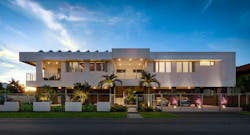
As high-performance building becomes more common in the residential space, builders, architects, and clients are weighing whether third-party certifications are worth pursuing. While these programs promise a structured roadmap and verification of advanced construction techniques, adoption rates and costs vary across markets and projects.
The programs also differ in focus and rigor. Most offer science-based verification that a home performs as designed; however, experts caution that these systems function as frameworks rather than absolute performance guarantees. Understanding these differences is key to how these programs are adopted in the field.
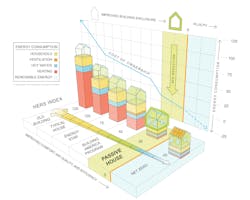
Energy Performance
Energy Star certification is often viewed as an accessible certification entry point. Dov Feinmesser, associate principal and director of sustainability at Newman Architects in New Haven, Conn., says the program’s straightforward processes, perceived affordability, and clear performance targets drive steady adoption in his market.
The standard is widely recognized, with more than 2.5 million homes and apartments certified through the government-backed program since it launched in 1995. However, as with any certification, costs for rating, modeling, and verification vary by region and by size of home (Energy Star provides its own estimates for incremental cost and savings for single-family new construction homes).
For projects targeting more aggressive performance measures, programs like Phius take a significantly more rigorous approach. Its passive building standard emphasizes insulation, airtight construction, careful detailing, and high-performance windows.
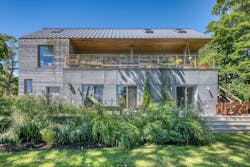
Architect Wayne Turett, owner of New York-based Turett Collaborative, says he designed his Long Island home using passive building methods to learn the process firsthand.
“We followed the passive house process in terms of setting performance targets early, prioritizing a very high-performing envelope, and focusing on airtightness, insulation continuity, high-performance windows and balanced ventilation,” he says. “For me, it was also about learning the process in a hands-on way, not just as a designer, but as an owner.”
MORE: Inside Architect Wayne Turett's Passive Home: A Living Lab
Similarly, Richard Pedranti, founder of his eponymous architectural firm in Milford, Pa., worked with builder Louis Costanzo to design Costanzo’s personal family home in Dalton, Pa., to Phius’ passive building standards.
“We view certification, specifically through standards like Phius, as the truth serum of high-performance building,” Pedranti says. “This third-party validation ensures the technical integrity of the building envelope and mechanical systems, protecting the homeowner’s investment by proving the home meets the highest global standards for energy, health, and durability.”
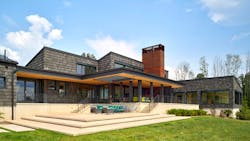
Pedranti says that, while registration and design review costs are comparable to other programs, the added coordination and documentation requirements can be burdensome, adding time and cost challenges, particularly for smaller project teams.
That was the case for Turett, who chose not to certify when building his own home.
“I toyed with it briefly, but it’s fairly expensive," he says. "To spend another $6,000 or $7,000 to certify it would have been out of the price range."
Most programs do offer levels of certification, with entry points designed to accommodate tighter budgets. Whatever the scenario, Turett says there’s still plenty you can do depending on your priorities.
“It’s not one or none, you don’t have to do the whole nine yards,” he says. “Do what you can. Certainly, the more the better, but anything you do is helpful.”
Health & Wellness
That approach also reflects a broader shift in how performance is defined, with growing attention to how homes support occupant health and comfort.
“Even when people are not initially motivated by energy savings or environmental responsibility, they’re motivated by how the home feels to live in,” says Turett. “When you talk about filtered fresh air, fewer indoor pollutants, and consistent comfort, that’s often when high-performance strategies like ERVs, better windows, and electrification start to resonate.”
Programs like WELL for Residential are emerging in response to that shift. International WELL Building Institute vice president Liz Miles says the WELL for Residential program, which was piloted in 2024 and is emerging as a full standard this year, addresses indoor air and water quality, thermal and acoustic comfort, lighting, material safety, and other factors that impact overall quality of life.
While other programs may include components of wellness within their framework, Miles says WELL for Residential focuses on more than 100 health-focused strategies and is intended to complement, not compete with, other programs.
Beyond energy and wellness, some programs assess the full environmental and operational impact of a home.
Holistic Approaches
LEED for residential was one of the earliest programs to assess measures beyond energy-efficiency, looking at the environmental impact of a building from a holistic point of view, including a strong emphasis on carbon consumption.
Piloted by the U.S. Green Building Council in 1998, it debuted as a full commercial building standard in 2000, expanding into residential construction and design in 2008.
The residential certification evaluates homes based on location and access to transportation, energy and water use, materials selection, waste management, and indoor environmental quality, assessing categories through a point rating system.
READ: Meet the brothers designing and constructing custom homes to LEED standards across Houston
Other programs are also gaining traction. Last August, Home Innovation Research Labs announced that its National Green Building Standard (NGBS) had reached 700,000 certifications across homes and apartments. Established in 2009, NGBS was the first green building rating system approved by the American National Standards Institute (ANSI).
NGBS emphasizes site design, resource efficiency, water and energy efficiency, indoor air quality, and operations and maintenance. Projects can also pursue optional add-on badges to the certification process, including badges for net-zero energy, universal design, and resilience.
At the International Builders' Show in Orlando, Fla., last month, Cindy Wasser, senior manager of Green Building Programs at Home Innovation, discussed new resilience-focused certifications in fire, wind, water, and earth (movement).
These add-ons are pursued in line with NGBS certification, not as a separate process, expanding the purpose and intent of certifications, where, in this case, hazard mitigations are now verifiable.
LEED for Residential Design and Construction offers global recognition and post-construction performance testing. While costs and documentation requirements are said to be higher than some programs, practitioners note it provides a structured, holistic framework.
Offering commentary on the rating systems, Feinmesser says, “NGBS and LEED are comparable in terms of their market share, but NGBS is more flexible and cost conscious and seems to be overtaking LEED in number of houses applied for.”
Unlike NGBS, LEED requires post-construction site testing to prove that the building is performing as intended. While the documentation requirement is higher, some say it lends a higher level of confidence and prestige.
Who’s in the Driver’s Seat?
In terms of who is actually initiating certification—the homeowner, the design team, or builder—it varies.
“While design and building professionals provide education and technical expertise, clients are the primary catalysts for certification because they want to verify that their home is safe, healthy, and energy efficient,” says Pedranti.
But not all go all-in. “Many of our clients embrace passive house principles and testing for their homes but do not always pursue official certifications.”
The homeowner-led drive for certification seems to apply more to basic certification and wellness-driven programs, he says.
For the more sophisticated programs like Phius, WELL, and LEED, architects often take the lead, initiating early conversations about performance goals, indoor air quality, and what a certification actually means in terms of design and planning.
Certification lives or dies in the field ... and that is where an experienced builder makes the difference.
- Architect Wayne Turett
For Energy Star and NGBS, builders often take the lead. NGBS, developed by the National Association of Home Builders in conjunction with the International Code Council, is often seen as more flexible and accessible for builders, which can be a vote of confidence for other practitioners as well.
“Certification lives or dies in the field. It requires airtightness discipline, sequencing, and quality control, and that is where an experienced builder makes the difference,” says Turett. “In some cases, especially with high-performance builders who have done this work before, I see the process as being builder-driven. They have the systems in place and understand that certification is not just a label, but a process.”
Dave Amundson, a project executive with C.W. Driver Companies in Huntington Beach, Calif., also believes that it’s more of a builder-driven process. “Builders are the ones who assess feasibility, model costs and ultimately determine whether those features can be executed within budget and timeline,” he says.
Overall, Turett says the best-case scenario is collaborative, with the architect, builder, and client aligned early on in treating certification as a shared goal, not an add-on.
Marketable Knowledge
When pursuing sustainable residential designs, builders and designers have much to gain from experience in this realm.
“Architects and builders who've navigated certification before know how to avoid costly mistakes, missed credits, failed inspections, and material substitutions that disqualify certification,” says Amundson. “That expertise saves time, money, and client relationships.”
Even if a project doesn’t end up formally certified, experience with programs like Phius, LEED or Energy Star provide a clear framework for what ‘high performance’ actually means. It moves the conversation from good intentions to measurable benchmarks, enforcing discipline in the field, with tighter envelopes, smarter ventilation, better detailing, and improved coordination.
Pedranti notes that his firm’s passive house expertise allows them to use precise energy modeling to ensure exceptional comfort and energy efficiency. “Adhering to these rigorous standards also supports top benchmarks for indoor air quality and structural durability,” he says.
Down the Road
Moving forward, architects and builders are saying they expect to see an uptick in residential green building certifications.
“Developers are increasingly focused on resilience, operating costs, and environmental impact, and green certification provides a clear framework to support those priorities,” says Amundson.
Meanwhile, Feinmesser anticipates that extreme weather events, rising utility costs, and real or perceived value will drive a growing need for more resilient, energy-efficient homes.
“Certifications will continue to offer a sense of confidence and security in a house's performance over time,” he says.
Related Reads
 Q&A graphic showing a headshot of Kat Klingenberg of Phius
 Cedar Renditions Siding in the finish Aluzinc
About the Author
Barbara Horwitz-Bennett
Barbara Horwitz-Bennett has been covering the AEC industry for the past 25 years. She writes for a number of industry magazines and works with AEC firms and product manufacturers on content writing projects.