The $580 Billion Wellness Market Is Changing How Homes Get Built
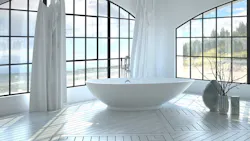
Over the past decade, builders, designers, and their clients have paid greater attention to the way homes impact health and well-being. From wellness-centric building certifications to considerations like lighting and ventilation, the industry is bringing wellness into the conversation early on in the process.
Here's what housing pros are saying, and how they’re integrating wellness into their projects.
How Did We Get Here?

Conversations about wellness in the home have often ended at amenities, but that’s changing. Following the COVID-19 pandemic, the housing industry saw a dramatic shift toward designing homes that actually improve the health and wellbeing of their occupants.
During this time, science-backed guidance about health and wellness in the home as well as growing builder adoption helped bring wellness into the housing industry. Because of this, the wellness real estate market has grown to more than $580 billion globally, according to the Global Wellness Institute. [Read the full story]
What Makes Housing Healthy

Laura Sullivan, founder of Asheville, N.C.-based ID.ology Interiors and Design recently joined the Women at WIRC podcast to discuss what actually makes a home healthy.
She talked about how wellness is about creating a space that works for you as you age, the importance of biophilic design, and the challenge behind sourcing quality, healthy home products. [Listen to the full podcast episode]
Integrating Wellness Early On

WELL for Residential's Liz Miles says wellness is more than just amenities. In a recent conversation with Custom Builder, Miles shared how the small decisions—from material choices to daylighting—come together to create healthier homes.
According to Miles, the next few years will see wellness considerations become a standard part of the home building process. And for those who want to be ahead of the curve, early planning is crucial.
“The best time to think about wellness is as early as possible because that's when you can have the greatest impact,” she says. [Read the Q+A]
Wellness in Design
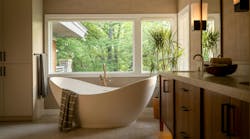 Wellness-inspired bathroom design
A bathroom outlook report from the National Kitchen and Bath Association found that in 2026, bathrooms are becoming larger to accommodate more wellness features. Of housing pros surveyed in the report, 72% say they’re noticing bathrooms becoming larger to accommodate wellness-centered features, storage solutions, and universal design considerations.
Tech-enabled wellness features have become especially common. Intelligent showers and toilets, lighting systems, and energy-efficient features are becoming more common because they streamline routines while improving wellness. [Read the full report]
Wellness in Certifications
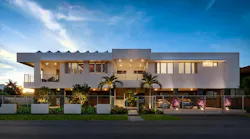
As homeowners seek out higher performing homes, certification programs such as Phius, Energy Star, WELL for Residential, LEED, and NGBS have become more popular in the residential space.
Many of these programs include wellness in their frameworks, but that’s especially the case for WELL for Residential. The program features more than 100 strategies that focus on the health and wellness of a home’s occupant and can easily be combined with other certifications. [Read the full story]
Related Reads:
 Cover home in LA
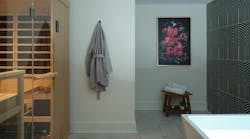 Home wellness studio
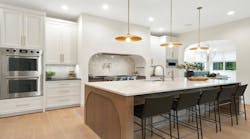 A large kitchen. with island and uniquely shaped vent hood
About the Author
Catherine Sweeney
Catherine Sweeney is the associate editor for Pro Builder and Custom Builder, where she creates both digital and print content, including Pro Builder’s daily e-newsletter and various news stories for both brands. Before joining Endeavor, she began her career in local journalism, later pivoting to the commercial real estate industry where she worked for several years as a reporter and editor.