Rebuilding the Palisades: Why Some Families Are Choosing Custom Over Speed
Story at a Glance:
- More than half of one builder's Palisades rebuild clients are choosing fully custom designs over like-for-like reconstruction, and that share is trending toward 75% among new leads.
- Going custom adds time and cost, since design runs three to six months, insurance payouts are based on the home that was lost, and departing from the original plan can move a project out of streamlined permitting.
- Two client homes show the range, from a fresh take on a classic Americana house to a near-match of the original that fixes the 5% that never worked.
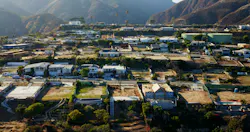
The Pacific Palisades wildfires didn’t just destroy homes; they erased a neighborhood that had taken decades to cultivate and build. The diversity of seeing Spanish Revivals sitting next to Craftsman bungalows, alongside shingled traditionals and many other architectural gems, was part of what gave the neighborhood its heartbeat.
Each home’s character was shaped by the people who occupied it. The architectural diversity wasn’t some accident; it was the result of thousands of personal decisions by the families who lived there, which helped the neighborhood evolve into what it had become.
Now, as the community rebuilds, the question is whether that character can survive a building timeline compressed from decades into a few years. Of course, we don’t want to “preserve character” at the cost of slowing things down or gatekeeping what the Palisades is meant to become.
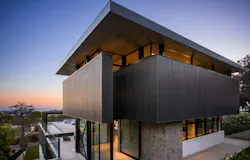
The families we’ve worked with aren’t trying to recreate the way things used to be down to the last detail. Instead, they are trying to figure out what they actually need now. Sometimes that looks like the exact home they lost, and sometimes it takes an entirely different shape. Either way, we view our team’s role as helping them build something that will feel both like home while also adding to the charm of the neighborhood they fell in love with years ago.
Case Study: A Fresh Take on a Classic
One family's original home was about as classic Americana as it gets: horizontal white siding, shutters, wood windows, and a pitched asphalt roof. When it came time to rebuild, the homeowners decided to go custom rather than carbon-copy what they had lost. They saw an opportunity to build a home that felt fresh while still honoring their taste for timeless, well-designed architecture.
MORE: Production Builders Are Creeping Into Custom Territory
They funded the project with a mix of insurance proceeds and out-of-pocket funds, so the budget was less about what the payout would cover and more about what they wanted to prioritize. Design took about five months, which is right in line with the typical three-to-six-month range for a client wanting to build a new home.
What stood out most wasn't the design decisions, it was the emotional arc. Like all of our rebuild clients, this family started from a place of deep grief. But that shifted quickly once the design process gave them something to hold onto. The moment we could show them a 3-D model of what their home could become, the mood in the room totally changed. Grief turned into genuine excitement about what was possible.
Case Study: A House That Looks the Same But Isn't
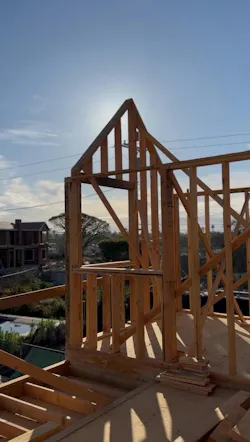
For another family, that sense of excitement came from getting back something familiar. We originally designed and built their home in 2010, and when it came time to rebuild, they wanted almost exactly the same house back. Any changes they made came purely from 15 years of living in it, like moving a few interior walls where daily use had exposed friction points and straightening out what had originally been curved walls to give the interiors a more contemporary feel.
From the street, you'd never know it was a different house. If anything, it reads as though they simply refreshed the exterior facade. But that was precisely the point, because this was still a fully custom process, just one where the client's priority was to stick to what they already loved. That kind of knowledge only comes from 15 years of living somewhere. Custom design doesn't always mean dramatic change. Sometimes it means having the flexibility to keep 95% of a home exactly as it was, while fixing the 5% that never quite worked for the family.
How Unique Is This Right Now?
Going custom has turned out to be more common than we expected. More than half of our rebuild clients are choosing fully custom designs over like-for-like reconstruction, and that share is trending toward roughly 75% as new leads come in. What started as an exception is quickly becoming the norm, at least within our pipeline.
We think it's worth being direct about what a custom path actually costs a family, because a thoughtful process is not the same as an easy one.
A custom design process takes longer than permitting a repeat of an existing floor plan. Design alone tends to run three to six months, and even when we're not adding scope, there's more iteration and more coordination with planning departments that are working through mandates that are themselves still being written and refined.
The moment we could show them a 3-D model of what their home could become, the mood in the room totally changed.
Insurance payouts are typically calculated against the value and specifications of the home that was lost, not the home a family might want to build instead. Some clients, like the family mentioned earlier, fund the gap with a mix of insurance and personal funds. Others adjust scope to stay within their payout. Very few are indifferent to the number, and the clients who are happiest with the outcome tend to go in with a clear sense of what they're willing to spend beyond the payout.
MORE: Designing for Recovery, Not Just Rebuilding After Disaster
Permitting is where the calculus gets complicated fastest. The Palisades rebuild has benefited from streamlined pathways in many cases, but those efficiencies are generally built around replicating what existed. The moment a design deviates from that baseline, it can move out of the fast lane and into standard review, which is a real cost families need to plan for.
So, is it worth it? For the families who've chosen this path, the answer has consistently been yes, because the home they end up with reflects who they are now. Sometimes that means something entirely new. Sometimes it means a house that looks exactly the same from the curb but finally works the way life actually happens inside it.
Either way, it's the same instinct that gave the Palisades its character in the first place: not preservation for its own sake, but individual families making individual decisions about how they want to live.
More on Wildfire Rebuilding and Resilience:
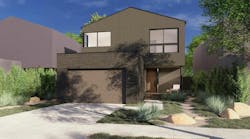
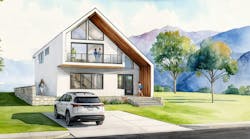 Exterior of the Altadena wildfire-resistant concept home by Essential Habitat Architecture
About the Author
 Brieanna Cunningham
Brieanna Cunningham
Brieanna Cunningham, Assoc. AIA, is a project manager and marketing manager at C&C Partners Design-Build in Redondo Beach, California.