5 Emerging Materials To Watch in Residential Architecture
Story at a Glance
- Blaine Brownell, professor and director of UNC's School of Architecture, shares five emerging materials addressing some of the building industry’s biggest challenges.
- The materials range from wood that behaves like steel to prefabricated straw walls and grown millwork, challenging traditional assumptions about how homes are constructed.
- Brownell says the materials revolution is underway, but it requires capable and willing builders and designers to attain its full potential.
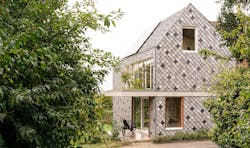
Blaine Brownell is Professor and Director of the David R. Ravin School of Architecture at the University of North Carolina at Charlotte, and an architect specializing in innovative materials research. Here, he identifies five emerging materials positioned to transform residential construction and design.
Conversations about innovation in residential construction often center on systems: smarter HVAC, more efficient solar, or advanced automation. But one of the most quietly transformative areas is materials, especially those emerging to address some of the building industry’s biggest challenges, from carbon emissions to labor inefficiencies and shortages.
Today’s custom home builders are navigating a shifting landscape. Clients want performance, sustainability, and healthy indoor environments—all without driving up costs or extending timelines. The good news is that new materials meeting those expectations are in development or already entering the market.
The materials we build with are no longer static choices, but strategic decisions.
- Blaine Brownell, professor and director, David R. Ravin School of Architecture at the University of North Carolina at Charlotte
These aren’t abstract, lab-only inventions; they’re engineered products that are either in-market now or expected to be viable in the next one to three years. They offer clear advantages, such as stronger performance, lower environmental impact, and new ways to build smarter, faster, and more creatively.
From wood that behaves like steel to prefabricated straw walls and grown millwork, these materials challenge traditional assumptions about how homes are constructed. More importantly, they promise to give builders a competitive edge in delivering homes that meet today’s demands without compromising quality or craftsmanship.
Here are five emerging materials worth watching—and, in some cases, specifying—in your upcoming projects:
Wood That Behaves Like Steel

The resurgence of wood construction, driven by carbon concerns and advances in engineered timber, has produced few materials as provocative as Superwood, in my view. Developed by Frederik, Md.-based InventWood, Superwood begins as natural timber but is chemically and mechanically transformed by removing lignin (the natural polymer that binds cellulose fibers) and then densifying those fibers.
The result is a wood product with four to 20 times the strength of conventional lumber, exceptional dent resistance, and a strength-to-weight ratio that rivals steel, all while remaining dramatically lighter.
For residential contractors, the strategic appeal lies in performance without penalty. Superwood offers Class A fire performance, extreme durability, and wear resistance—qualities that traditionally lead builders to choose steel or aluminum. Yet it retains the warmth and workability of wood, opening new possibilities for slimmer profiles, longer spans, and more expressive detailing in decks, facades, stairs, and structural accents.
From a sustainability standpoint, Superwood is a clear upgrade: it is renewable, carbon-sequestering, and far less energy-intensive than metals. While costs are currently higher than commodity lumber, InventWood is already producing Superwood for decking and cladding, with expanded availability anticipated this year. As production scales, Superwood may enable builders to replace carbon-heavy materials without sacrificing performance or design ambition—a rare and valuable proposition.
Mycelium That Acts Like Wood
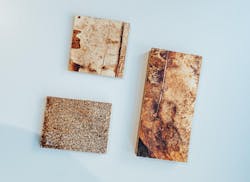
Mycelium-based materials have become familiar as insulation or packaging, but MycoWood from Comu Labs represents a more radical mutation: mycelium that behaves like wood. Designed as an alternative to plywood and MDF, MycoWood is grown from fungal networks and agricultural waste, then compressed into panels that can be cut, machined, and finished using standard woodworking tools.
The strategic value for residential builders is twofold:
- First, MycoWood addresses a growing concern around indoor air quality and wellness. Unlike conventional engineered wood products, it is formaldehyde-free and non-toxic, making it attractive for cabinetry, millwork, wall panels, and built-ins in health-conscious homes.
- Second, it introduces a new production model: Comu Labs’ microfactory system enables panels to be grown locally in about a week, dramatically reducing supply chain length, transportation emissions, and material lead times.
From a sustainability perspective, MycoWood replaces extractive forestry with grown material, using waste as feedstock and offering compostability at the end of life.
While it is currently best suited to non-structural interior applications, its design flexibility and low environmental impact position it as a compelling option for builders seeking distinctive, story-driven interiors that align with circular design principles.
Pre-Fab Straw Panel Systems

Straw has quietly supported buildings for centuries, but EcoCocon reintroduces it in a form that aligns with modern expectations for performance, precision, and speed. The company’s prefabricated wall panels combine compressed straw insulation, a load-bearing wood frame, vapor-permeable membranes, wood fiber sheathing, and clay plaster finishes into a single, factory-built system.
For custom builders, EcoCocon’s primary advantage is predictable performance with reduced site labor. The panels arrive ready to install, minimizing on-site assembly time while delivering exceptional airtightness, thermal performance, and moisture management. The vapor-open assembly eliminates thermal bridges and reduces the risk of trapped moisture, which are common failure points in some wall systems.
Sustainability is where EcoCocon truly shifts expectations. Composed of roughly 98% renewable materials, the panels are carbon-negative, storing more CO₂ than they emit during production. This characteristic makes them particularly attractive for net-zero and high-performance homes, where envelope quality is paramount.
Already established in Europe and now expanding in the U.S., EcoCocon offers builders a way to combine the efficiency of prefabrication with biogenic materials, enabling faster construction schedules while delivering homes that perform—and market themselves—at a higher environmental standard.
Recycled PVC Wall and Roof Cladding
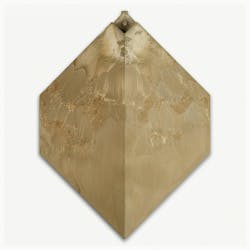
Plastic waste is one of construction’s most persistent challenges, particularly PVC, which has historically been difficult to recycle. Pretty Plastic Panels, developed by FRONT Materials, confront this problem directly by transforming 100% reclaimed PVC building waste—including old window frames and downspouts—into durable exterior cladding modules.
For builders, the appeal is both practical and environmental. Pretty Plastic Panels offer excellent moisture resistance, durability, and low maintenance, making them well-suited for facades, accessory structures, and exterior accents. Installation follows familiar panelized systems, minimizing the learning curve for crews. Unlike fiber cement or metal cladding, the material does not rot, corrode, or require frequent refinishing.
Staying informed about material innovation isn’t just a curiosity—it’s a form of future-proofing.
Sustainability is the defining mutation. By closing the loop on PVC—a material typically landfilled or incinerated—the panels convert a significant waste stream into a long-life building product. Aesthetically, the panels offer a distinctive visual character: uniform from a distance, yet richly variegated up close, since no two panels are identical.
Already commercialized and installed across Europe, Pretty Plastic Panels point to a future in which recycled plastics compete credibly with traditional cladding, giving builders a circular alternative without sacrificing durability or design impact.
"Concrete" That Captures Carbon
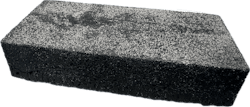
Concrete remains indispensable in residential construction—especially for foundations—but it is also one of the industry’s largest carbon emitters. ESM, or Enzymatic Structural Material, developed by researchers at Worcester Polytechnic Institute, offers a compelling alternative: a concrete-like material that captures carbon rather than emits it.
ESM is produced using an enzyme-driven process that converts atmospheric CO₂ into mineral particles, eliminating the need for energy-intensive clinker production and lengthy curing times. The resulting material reaches usable strength in hours rather than weeks and achieves compressive strengths comparable to conventional structural concrete.
For residential builders, ESM’s potential lies in foundations, repairs, and modular construction, where speed and adaptability matter. Faster curing could shorten schedules, while the material’s repairability and re-formability offer advantages for adaptive reuse and resilient construction.
Environmentally, the impact is striking: producing one cubic meter of ESM sequesters more than 6 kg of CO₂, compared with the roughly 330 kg emitted by traditional concrete, the company says. While ESM is still emerging and not yet code-ready for widespread residential use, it exemplifies a new category of carbon-negative structural materials that could fundamentally reshape how builders approach foundations over the coming decade.
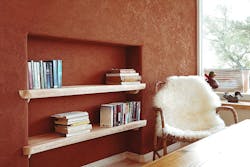
As construction technologies evolve, the materials we build with are no longer static choices, but strategic decisions. Each product featured here offers more than just novelty; it represents a competitive advantage in a changing market. Whether it’s reducing carbon emissions, simplifying installation, enhancing indoor air quality, or creating more resilient building envelopes, these materials address problems that matter to clients and contractors alike.
Importantly, these innovations aren’t distant or speculative. They’re in early-stage production, pilot projects, and in some cases, full-scale building applications today. For custom home builders, that means it’s not too early to ask: “What’s next?” And more pointedly: “What can I adopt now that puts me ahead of the curve?”
Staying informed about material innovation isn’t just a curiosity—it’s a form of future-proofing. As clients continue to prioritize sustainability, wellness, and long-term performance, the contractors who understand and embrace these next-generation products will be better equipped to lead. Whether it’s wood decking that outperforms steel or insulation grown from fungi, the materials revolution is underway—but it requires capable and willing builders to attain its full potential.
You Might Also Like
 Southeast facade of architect Wayne Turett's Passive House on Long Island
 Exterior of the Altadena wildfire-resistant concept home by Essential Habitat Architecture
About the Author
Blaine Brownell
An architect and researcher focused on emergent materials and sustainable building technologies, Blaine Brownell, FAIA, is Professor and Director of the David R. Ravin School of Architecture at the University of North Carolina at Charlotte. A former Fulbright scholar to Japan, he has authored nine books on advanced and sustainable materials for architecture and design, including Matter in the Floating World, Material Strategies, and the four-volume Transmaterial series. His work has appeared in more than 70 architecture, design, science, and news publications, including The New York Times, The Times of London, The Wall Street Journal, and Nature. His most recent book, The Pandemic Effect, examines how the built environment can be inoculated against future risk.