Branded Residences Are Changing What Luxury Buyers Expect
Story at a Glance:
- Branded residences and custom homes can attract buyers with similar wealth profiles but different purchasing priorities.
- The growth of branded residences is shaping amenity and service expectations across the broader luxury residential market.
- While custom builders are unique to the market, they can borrow elements of what makes branded residences successful by introducing service, a frictionless building experience, and client relationships that continue post-build.
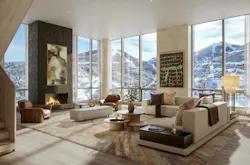
Living in a branded residence is like never having to check out of your hotel. For buyers willing to spend a pretty penny, the appeal is simple: you don't have to do anything except arrive.
As buyers become more mobile and global, the combination of turnkey living, security, hospitality services, high-end amenities an elevator ride away, and someone to call when something needs attention makes this lifestyle particularly enticing.
Hotel brands like Four Seasons, Mandarin Oriental, Aman, and St. Regis put their names and standards on residential developments, and they've since been joined by automotive marques like Bentley, Porsche, and Bugatti, plus fashion and restaurant brands, who want to capitalize on this global movement. The promise is a way to live with the brands buyers already know, rather than experience them only on vacation or through a luxury product they own.
Global branded residential development has almost tripled over the past decade, growing from 354 total projects in 2015 to 903 at the end of 2025 and nearly 1,400 expected in 2027, according to the 2026/2027 Knight Frank Residence Report. Dubai leads the market, while South Florida and New York are also major hubs. Knight Frank says hospitality-led services and wellness amenities are driving broader demand.
Still, that doesn't mean every buyer wants a branded home. For custom builders, the question is whether these developments draw from the same pool of buyers and, more importantly, how their growth is shaping expectations for private homes.
Similar Wealth, Different Priorities
On price, branded residences and custom homes may actually compete for the same buyer, but those buyers may be motivated by different lifestyle choices. Builders and architects should identify what a client finds attractive about the branded-residence model rather than treating the entire category as a generic competitor.
MORE: Building for Clients With Global Tastes
Knight Frank reports that the average residential portfolio of an ultra-high-net-worth individual has increased from 2.9 to 3.8 properties in less than a decade. As portfolios grow, buyers may own both a branded residence and a single-family custom estate, each serving a different purpose.
Leslie McElwreath, senior global real estate advisor with Sotheby’s International Realty based in Greenwich, Conn., sees both sides of the market. Her notable listings include Kathie Lee Gifford's record-breaking $100 million waterfront estate and brand-new builds.
“People want new and they want easy,” McElwreath says. She is seeing condos in downtown Greenwich gain traction among younger buyers, as well as interest in the St. Regis Residences in nearby Rye, N.Y. “On the other hand, there are many people interested in custom homes. Buyer types for these larger estates are unpredictable these days. It could be a couple in a large estate, empty nesters, or a large family who need the space.”
“People want new and they want easy.”
- Leslie McElwreath, Sotheby’s International Realty
In practice, that means owners of branded and similar amenity-rich residences can come and go without personally assembling the staff and services needed to maintain the property. Some buyers want less land because even paying others to maintain it requires supervision. Others still want a single-family home but increasingly hire companies for routine upkeep.
Los Angeles–based Carolwood Estates represents branded residential projects for Rosewood, Mandarin Oriental, and Four Seasons, as well as single-family homes. Nick Segal, the firm's managing broker, says branded developments have helped fuel demand for cold plunges, saunas, and dedicated wellness spaces in private homes.
"To be competitive, you need to offer as many bells and whistles as you can," Segal told Knight Frank. "We’re seeing more and more homes, whether it’s a new development or a single-family residence, with as many luxurious attributes as possible."
Built Around One Household
Custom builders don't need to match a branded development amenity for amenity. The stronger pitch is what a private home can offer that a shared building cannot. Before countering a branded-residence pitch, builders need to understand what interests the client, whether that's less maintenance, fewer decisions, confidence in the team, or a simpler ownership experience.
Robert Burrage, founder of Palm Beach, Fla.-based RWB Construction Management, sees little direct competition between branded residence and custom-build clients in his South Florida business.
“You're not really playing in the same ballpark. One is completely separate from the other," he says. Burrage doesn't have a standard client. Instead, he works with some of the world's wealthiest. He says he was tapped to guide plans for a home for billionaire Larry Ellison, a concept that was never built.
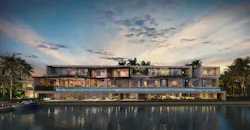
“What I’m building for individuals is essentially that entire package under one roof as a single-family residence,” Burrage says. For him, every decision begins with the household’s routines rather than an existing floor plan, and a private commission lets the team establish those requirements before designing the home. What sets a custom home apart is not always the number of amenities, but whether the home can be organized around one household in a way a shared development cannot.
“You’re not really playing in the same ballpark.”
- Robert Burrage, RWB Construction Management
Burrage recalls past clients living at a luxury, full-service condo in West Palm Beach before deciding to commission a custom build. As their family grew to include grandchildren, their requirements changed. It helps builders understand what a proposed home must accommodate that the client’s current residence does not.
In Park City, Utah, Laurie Wing, co-owner of Dowie Wing Custom Homes and an agent with Summit Sotheby's International Realty, describes decisions that begin with the land. A lot’s orientation affects views and living-space placement; terrain and climate influence driveway heating, ski storage, and garage access. These are practical reasons to involve the building and design team before committing to a plan. As an agent, she also represents developments in Deer Valley East Village, home to the new Four Seasons Residences.
“Wealthy individuals coming in from major cities expect high levels of finish,” Wing says. This means her custom home team has to raise its own bar for customization and finish quality. She adds that a custom team can ask questions clients might not have considered before plans are drawn.
Knight Frank’s luxury outlook suggests that familiar amenities are no longer enough to distinguish one property from another. For custom builders, craftsmanship, individuality, and a sense of place can be more persuasive than adding another room to the amenity list.
What Branded Developments Can't Replicate
The client relationship is one advantage builders can make tangible. Burrage brings the designer, architect, engineers, and contractor together early and stays involved through move-in and maintenance. That approach also gives the owner a clear team to call on after the project is finished.
“Collaborate and create teams with people that are like-minded and they’re going to push the ball down the field, not keep the project from moving forward,” he advises.
MORE: The Rise of Construction Client Concierges
McElwreath warns that bringing designers in after work has begun can introduce changes and delays. “Get your team together from the get-go, because everything just goes so much more smoothly if you’re prepared," she says.
Branded residences have made ease of ownership part of the sales pitch, and builders can address that concern directly. Before construction ends, spell out who will handle maintenance, what falls to a property manager, and whom the owner should call. Remote controls for heating, security, and access can help owners prepare a home before arriving, but only if the systems and the people responsible for them are planned from the start.
“How many people can you train to deliver truly excellent service?” asks Luca Solca, global head of luxury goods research at Bernstein, in a Knight Frank analysis. The question applies to any promise of ongoing support. A builder needs dependable people and defined responsibilities behind it, not a loosely described concierge offering.
Builders don’t need to promise hotel-style service in a private house. They need to find out what a buyer likes about branded living, whether that is less upkeep, a reliable team, or a home ready on arrival, and show how a custom project will address it. The value of custom lies in the decisions along the way, from arranging private spaces to handing over a complex home. Builders make that value tangible when they explain both the choices the client controls and the work the team will take off the client’s hands.
More On the Client Experience:
 Women at WIRC logo / Linda Cirigliano
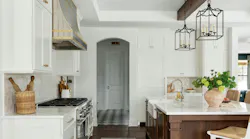
 Interior of a Washington residence by Mahya Salehi Studio
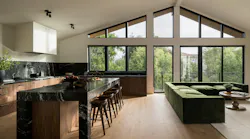
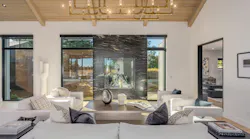 Interior of 601 Napa Road by Douglas Elliman
About the Author
Emma Reynolds
Emma Reynolds is a New York City-based freelance luxury writer who covers travel, real estate, design, architecture, and more. Her works has appeared in Forbes, Robb Report, Elite Traveler, Business Insider, Mansion Global, and many more.
Related
 stylish living room interior with a woman walking (blurred)