Custom Architects Say Luxury is Holding, While Mid-Tier Adjusts
Story at a Glance:
- A survey by John Burns Research & Consulting reveals the custom home market was flat in Q4 2025.
- However, the survey reports signs of optimism among architects for Q1 2026.
- Luxury projects remain resilient, while mid-tier and entry-level segments are adjusting to rising costs and economic uncertainty.
- The survey also reports on trends, offering a closer look at what architects are seeing on the ground.
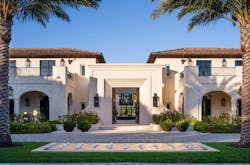
It's a "normal but flat" market, according to a survey of more than 600 custom residential architects and designers who are reporting that high-end projects continue to move forward, while mid-tier clients are adjusting plans (scaling back, pausing, or redirecting to remodels) due to rising construction costs, interest rates, and economic uncertainty.
The Q4 2025 survey, conducted by John Burns Research & Consulting (JBREC) and Sola Group for the U.S. Custom Residential Architecture Index, found a modest slowdown in overall project activity, with custom architects reporting completing 4% fewer projects year-over-year, and average project revenues dropping by 2.6%.
Index Stable, Slightly Optimistic
The consultancy combines survey responses into a composite index: anything above 50 signals growth, below indicates slowing activity; the overall index came in at 48, just under that "growth" benchmark. JBREC describes the market as flat but slowing.
But there are signs of optimism: The forward-looking activity index, tracking forecasts through March, came in at 56, showing architects are more optimistic in early 2026.
Wealthier clients are moving forward. Those with more modest means are taking a definite, measured approach.
- Survey respondent, national design principal
A Split Market
The survey shows that luxury work remains resilient, while mid-tier projects are adjusting to interest rates and other economic stresses. Architects report that some clients are pausing new builds, while others are opting for phased construction or renovations as alternatives; entry-level custom seems particularly vulnerable.
More: What's Shaping the Custom Home Market in 2026?
Key survey numbers:
- 42% of architects and designers say most of their work (70% or more) is luxury-focused; 10% work exclusively on luxury projects.
-
Interest in second and vacation homes is softening: 39% of architects reported a decrease in demand, while just 14% reported growth. Demand for second homes is a leading indicator for the custom home market, JBREC says.
Architect perspectives:
"Wealthier clients are moving forward. Those with more modest means are taking a definite, measured approach.”
– National design principal
“Some clients are opting for smaller projects but with higher detail and finishes. Others are doing full designs but opting to break construction into multiple phases.”
- Architect in Texas
“The client interest is there, but once pricing is obtained after a round of design, the construction cost kills the job.”
– Illinois architect
"Our market is entry-level custom residential. Prices have increased so much over the last 5 years that our client base is almost at the point of not being able to afford to build in the Los Angeles market.”
- Architect in California
“Additions and remodels are still going strong, but a huge drop in ground-up new custom homes.”
- Head of architecture/design in California
The JBREC report says it's not lack of interest but financial feasibility (cost pressures, interest rates, and overall economic uncertainty) driving those mid-tier adjustments, wheras luxury clients remain largely insulated, moving forward on high-end customs builds.
The Focus of Current Projects
Beyond the split in demand, the survey offers a picture of what architects are focusing on in their custom residential design projects right now.
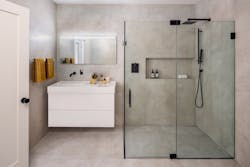
Energy efficiency/sustainable design tops the list at 63%, followed by luxury finishes and personalization (58%) and universal design (55%), demonstrating a mix of performance, aesthetics, and long-term livability as priorities.
More: Why a New Hampshire Couple Chose a Passive House Over Renovation
At the same time, 52% report a focus on reducing costs for clients, reminding us that budget pressures are still part of the conversation, regardless of project type.
When clients do choose to invest in luxury features, the report finds that their primary motivation is to achieve a particular aesthetic or design vision, followed by increasing home functionality/comfort/convenience, and adapting homes for future needs.
Specialty Rooms in Demand
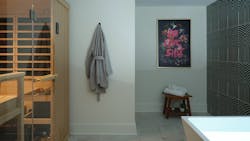
The survey also found that certain specialty rooms are becoming expected parts of custom homes. Architects report increased demand for specialty spaces over the past five years, particularly boutique-style closets (54%), home gyms (54%), spa-like bathrooms (40%), wine cellars (33%), and game rooms (29%).
Some features are more niche but seem to be gaining traction. Among write-in responses, golf simulators were frequently mentioned.
At the same time, other features are shifting from upgrade to expectation. En-suite bathrooms for secondary bedrooms are now considered a must-have by 51% of architects, signaling a broader move toward privacy and perhaps a nod to more interest in multi-generational living.
Kitchens Are Seeing Double
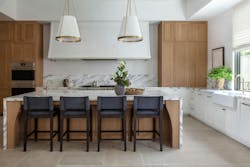
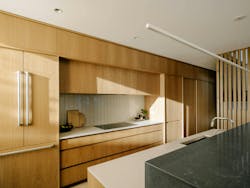
Kitchens are often where these higher expectations show up in custom projects. What was once considered ultra-luxury in these spaces is now increasingly becoming the norm.
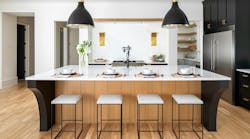
For instance, architects in the JBREC report said that most luxury custom kitchens now include two ovens (77%), two sinks (73%), and often two refrigerators (58%). Notably, 13% of respondents say they're including three sinks in projects.
There are limits to the duplication though. More elaborate features, like double islands, are not as common, appearing in just 16% of projects.
Where Custom Matters Most
The survey shows that clients are highly selective in products they prefer to invest in by requesting customized designs (over off-the-shelf options).
Cabinetry and millwork lead by a wide margin. Of those surveyed, 83% of architects and designers say these elements are most often custom-made in their projects, followed closely by built-ins like shelving and storage (80%). There's a sharp drop from there, with tile and stone, including customized patterns and mosaics, coming in at 58%
Material preferences are also strong. Clients continue to favor natural materials, with 76% of architects reporting a preference for real wood, stone, and similar finishes over alternatives. Though there are nuances: Granite, while a natural stone, was called out by respondents as being outdated.
In contrast, clients are more flexible with their selections in other product categories. Off-the-shelf hardware and plumbing fixtures are just fine for more than three quarters of custom architects’ and designers’ luxury clients, the report finds.
Additions and remodels are still going strong, but a huge drop in ground-up new custom homes.
- Survey respondent, head of architecture/design in California
Remodels Grow in Scope
While some new builds are slowing or being reconsidered, remodels and additions are expanding in scope.
About 34% of architects and designers report that their luxury clients are increasing the scope of remodels and additions, compared to just 12% who say projects are getting smaller.
These projects are no longer limited to surface updates. Architects describe full-scale upgrades that include insulation, windows, doors, siding, roofing, mechanical systems, and lighting, to bring older homes up to current energy and design expectations.
“Remodels and additions have become comprehensive ‘makeovers’ with upgraded insulation, windows, doors, siding, roofing, mechanical systems, and lighting.”
– Architect in the Northeast
“Family room additions are now typically including dining and kitchen space/extensions.”
– Architect in Michigan
The survey paints custom building and design as a tale of two markets: luxury clients are moving forward, and are a continued, valuable segment for builders and designers, while mid-tier buyers are weighing decisions more carefully, suggesting remodeling projects as a potential shift for firms looking to maintain numbers and meet clients where they are.
QUICK POLL: SHARE YOUR OWN CHALLENGES
Related Reads:


About the Author
Pauline Hammerbeck
Head of Content
Pauline Hammerbeck is head of content for Custom Builder, the leading business media brand for custom home builders and their architectural and design partners. She also serves as a senior content strategist for Pro Builder, where she directs the brand's MVP Product Awards. With experience across the built environment—in architecture, real estate, retail, and design—Pauline brings a broad perspective to her work.